Category Archives: Cancer

Advertising claims for more dietary supplements “cross the line”

It”s illegal for supplements to be promoted as a “treatment” for a disease. They can “support” health, or “boost” the immune system, or use other vague claims. But before any product can legally state that it can treat a specific disease it must pass US Food and Drug Administration (FDA) regulations for drugs.

The dietary supplements listed below have crossed the line by claiming to treat cancer, arthritis, fibromyalgia, and seizures.

Continue reading Advertising claims for more dietary supplements “cross the line” →

Death after using selenium to treat suspected prostate cancer

Here’s a disturbing report.

After a single test showing a raised level of prostate-specific antigen, a 75-year-old man became concerned about prostate cancer. He researched prostate cancer on the Internet and discovered that selenium may have a role in its prevention and treatment. He purchased sodium selenite powder and tablets from two separate pharmacies. Overdosed himself, and died in the hospital intensive care unit about 5 hours later.

What are we to learn from this sad case?

Continue reading Death after using selenium to treat suspected prostate cancer →

Acupuncture not effective in perimenopausal women with hot flashes.

A recent study reported that self-acupuncture was associated with long-term relief of vasomotor symptoms (hot flushes) in patients with breast cancer or prostate cancer who are undergoing anticancer therapy.

Unfortunately, this does not seem to apply to women in perimenopause.

Here are the details of a recent study.

Continue reading Acupuncture not effective in perimenopausal women with hot flashes. →

Self-acupuncture to control hot flushes in patients with breast and prostate cancer

Vasomotor symptoms can be extreme in patients with breast cancer or prostate cancer who are undergoing anticancer therapy. At the Royal Marsden Hospital in the U.K., an audit of 159 patients experiencing an average of 16 flushes per day revealed that self-acupuncture is associated with long-term relief of vasomotor symptoms in cancer patients.

Here’s a summary of the results

Continue reading Self-acupuncture to control hot flushes in patients with breast and prostate cancer →

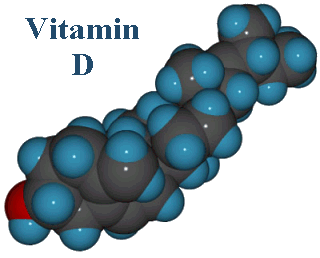
Vitamin D protects from cancer of the pancreas

Laboratory studies show that there are up to three times more vitamin D receptors on pancreatic cancer cells than on normal pancreas cells. Moreover, the exposure to high concentrations of vitamin D(3) reduces the number of pancreatic cancer cells.

Now, the results from an epidemiological survey confirm the relationship between vitamin D and cancer of the pancreas.

Continue reading Vitamin D protects from cancer of the pancreas →

Aromatherapy: Getting organized

Making the rounds this morning is a Newswire release from MD Anderson Cancer Center about Cherie Perez. She’s a research nurse who teaches aromatherapy to cancer patients during their treatment at the Cancer Center. You can read it here.
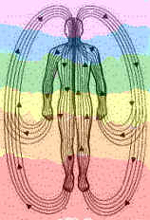
Since my background is based in traditional medicine, the involvement of this prestigious medical center sparks my interest to learn more about aromatherapy. I start by looking for structure.

It turns out, there are lots of ways to use oils.

Here, from Psychology Today are the five common types of aromatherapy.

Continue reading Aromatherapy: Getting organized →

Polarity therapy and radiotherapy-induced fatigue

In the Polarity model, “health is experienced when energy systems function in their natural state,” according to the “American Polarity Therapy Association (APTA).

Sounds good. And in a study of 15 women undergoing radiation therapy for breast cancer there was a statistically significant improvement in cancer-related fatigue and health-related quality of life.

Continue reading Polarity therapy and radiotherapy-induced fatigue →

A good summer for curry

Two studies published this summer showed positive health effects of curry. One looked at brain function, the other at the colon.

First, the brain.

Mini-Mental State Examination (MMSE) scores were compared among 1010 elderly Asians, aged 60 to 93 years. The MMSE is used to determine the extent of dementia in adults. The results of the test were then compared to categories of curry consumption: “often” (more than once a month), “occasionally” (once or more in 6 months but less than once a month), and “never or rarely.”

And the results.

Continue reading A good summer for curry →

Starchild Abraham Cherrix’s legal victory

CancerBlog reports that Starchild Abraham Cherrix, a 16-year-old cancer patient, will be permitted to avoid a second round of cancer treatment in favor of CAM. The court ruled that a board-certified radiation oncologist of his choice who is interested in alternative treatments must treat him.

The young man is taking the Hoxsey method, an herbal treatment that is illegal in the United States but can be obtained in Mexico.

Abraham got his legal victory. What he really needs is a medical victory. Don’t bet the farm on Hoxsey.

Continue reading Starchild Abraham Cherrix’s legal victory →

Transcranial magnetic stimulation and neuropathic pain

The results from two studies of transcranial magnetic stimulation (TMS) may lead to a better method of predicting or assessing the effects of drugs used to treat neuropathic pain.
In TMS, a magnetic coil is moved over the brain. The resulting magnetic fields induce tiny electrical currents in the skull that alter the activity of nerve pathways, leading (in these studies) to stimulation of different areas.

In the first study, the antiseizure drugs carbamazepine (Carbatrol), gabapentin (Neurontin) and topiramate (Topamax) administered to 8 patients with neuropathic pain reduced the TMS excitability of certain nerves in the brain.

In the second study, the extent of the suppresion of the nerves was greater in 23 patients with neuropathic pain as the dose of topiramate increased.

Here’s some background.

Continue reading Transcranial magnetic stimulation and neuropathic pain →

Who is Matthias Rath, and why is he in trouble with the law?

The trial of alternative medicine practitioner Dr. Matthias Rath started last week in Hamburg. Dr. Rath advocates a vitamin treatment to cure cancer. In this case a 9-year-old boy with bone cancer died after he [Dr. Rath] convinced the boy’s parents to use a “miracle cure” rich in vitamins and to reject conventional medical treatments.

The child’s mother, Anke Feld, tells a bizarre story of conspiracy among physicians, conventional medicine, and the pharmaceutical industry in which her son was a pawn. She believes her son “died as a result of the numerous clinical and medical errors and the negligence with which our son was treated in the different hospitals.”

Dr. Rath, whom Ms. Feld thanks for his support and guidance, is the founder of Cellular Medicine, which his website describes as a groundbreaking concept that identifies nutritional deficiencies at the cellular level as a root cause of many chronic diseases. A critical view of him is provided here.

7/28/06 15:32 JR

Lack of a direct association between marijuana and lung cancer

A newly published review in the Archives of Internal Medicine confirms what has been known since 1988. Epidemiological and clinical data do not show a direct cause and effect relationship between marijuana smoking and the development of lung cancer.

Possible reasons that studies detect lung damage but not cancer in marijuana smokers include the young age of the smokers studied, the small number of people included in each study, and the lack of long-term monitoring.

What was found in marijuana smokers included the following:

  • The lungs are exposed to tar (the solid residue of tobacco smoke containing byproducts of combustion)
  • The macrophage cells in the alveoli (the oxygen exchange cells) that should protect against noxious substances do not work properly
  • There is increased oxidative stress
  • Cells in the bronchi (the air passages) show an increase in abnormal and precancerous findings

Since some bronchial cell changes appear to be precancerous, an increased risk of cancer among frequent marijuana smokers is possible.

7/15/06 14:20 JR

Vitamin C, antioxidants, and cancer treatment

Just in time for the berry harvest, two articles published on Friday (6/13/06) revisit vitamin C and antioxidants and their role in the treatment or prevention of cancer. The MSNBC “feel good” article is about vitamin C and antioxidants such as ellagic acid and pterostilbene, which are found in berries. “Do normal portions of berries give us enough phytochemicals to get protective benefits?” After 9 paragraphs the author discloses that we just don’t know, and ? you guessed it ? “more research is needed”.

On the same day, the Kansas City Star published an article that wondered if the two government-sponsored studies intended to test the claims of Linus Pauling, the Nobel laureate-turned-vitamin C advocate, might have succeeded if vitamin C had been administered directly into the vein rather than taken by mouth.

Not sure how this applies to berries bought at Stop & Shop, but at least we are reassured that more research on vitamin C is ongoing.

It has been three decades since Dr. Pauling and his collaborators first reported (first 4 citations listed here) beneficial effects of high-dose vitamin C (ascorbic acid) therapy for patients with terminal cancer. It might be another 30 years before we can say that research has clarified its role.

Until then, I’ll have strawberries on my corn flakes, please, because I like them and not because the antioxidants they contain make them an unsung cancer weapon.

6/26/06 18:14 JR