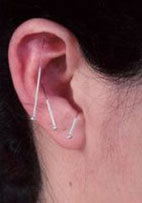
 I originally emphasized the substance (smoking) use aspect of this study, but have edited this summary based on a reader’s comment shown below. Continue reading Acupuncture for women with substance use, anxiety, and depression
Category Archives: Anxiety (Panic)/Depression
A 3-step program to manage belonephobia
 Many people dislike needle-sticks. But once the fear becomes persistent, excessive, and unreasonable, it’s a phobia (belonephobia, needle-phobia, trypanophobia). Although not well recognized, belonephobia affects up to 10% of people.
In a Medscape article, Dr. Mary Muscari, who is Professor and Director of Forensic Health/Nursing at the University of Scranton in Pennsylvania, discusses the signs and symptoms, diagnosis, and treatments — which emphasize CAM. Continue reading A 3-step program to manage belonephobia
CAM options for symptom management in children with cancer
 Ms. Jennifer Rheingans is a nurse educator for pediatrics at Sarasota Memorial Hospital in Florida. In the Journal of Pediatric Oncology Nursing she reviews nonpharmacological therapies as a potential source of assistance for children with symptoms due to cancer treatment.
Symptoms and CAM options are listed below. Continue reading CAM options for symptom management in children with cancer
Acupuncture during lithotripsy
 Lithotripsy is a medical procedure that uses shock waves to break up stones that form in the kidney, bladder, ureters, or gallbladder.
Researchers at Yale School of Medicine studied if the combination of auricular and body acupuncture might reduce the need for sedation during lithotripsy. Continue reading Acupuncture during lithotripsy
Going on the road to introduce Ayurveda to American medical students and physicians
 A 12-hour course in Ayurveda is being offered to American medical students, residents, faculty, and practicing physicians. Continue reading Going on the road to introduce Ayurveda to American medical students and physicians
Using the telephone in place of clinic or home visits
 Remote access to patients with chronic heart failure (by telephone or telemonitoring) has a positive effect on health and wellbeing.
Researchers from Australia and Canada reviewed 14 studies of remote monitoring in more than 4000 patients.
Here are the results. Continue reading Using the telephone in place of clinic or home visits
How might omega-3 improve mood?
 Of course we don’t know for sure if it does improve mood, but just in case, Dr. Sarah Conklin from the department of psychiatry at the University of Pittsburgh has a possible mechanism.
She presented the results of this study during the American Psychosomatic Society’s Annual Meeting in Budapest, Hungary.
Omega-3 effects on mood, personality, and behavior
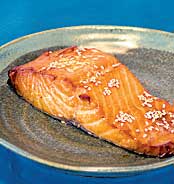 There’s growing interest in the relationship between fatty acids and variability in mood, behavior, and personality.
Here are the findings of a study conducted by researchers at the department of psychiatry at the University of Pittsburgh in the US.
Continue reading Omega-3 effects on mood, personality, and behavior
Using massage and acupuncture to help control symptoms after cancer surgery
 More data from the University of California, San Francisco in support of CAM in the care of cancer patients.
Continue reading Using massage and acupuncture to help control symptoms after cancer surgery
Transcendental meditation in patients with congestive heart failure
 A study from the University of Pennsylvania reports that transcendental meditation (TMed) “can be effective in improving the quality of life and functional capacity of African American CHF [congestive heart failure] patients.”
Continue reading Transcendental meditation in patients with congestive heart failure
Where does an agoraphobic go for treatment of panic disorder?
 Despite effective treatment, people with panic disorder complicated by agoraphobia often find it prohibitively difficult to seek treatment, according to Dr. Claudio Soares in a Journal Watch article.
What to do?
Continue reading Where does an agoraphobic go for treatment of panic disorder?
Mindfulness meditation to relieve depression in women with fibromyalgia
 In a letter to the editor several years ago, Dr. David von Weiss argued for consideration of mindfulness meditation when treating fibromyalgia.
As a family physician who taught mindfulness meditation, he found that patients with fibromyalgia were grateful for the improvement after learning this mind/body process.
A PubMed search on “mindfulness” and “fibromyalgia” disclosed only two clinical studies. Here’s what they report.
Continue reading Mindfulness meditation to relieve depression in women with fibromyalgia
Using omega-3 fatty acids to treat anxiety in substance abusers
 These researchers observed an association between anxiety disorders and substance abuse. They also observed that substance abusers tend to have poor dietary habits.
Here’s what they did.
Continue reading Using omega-3 fatty acids to treat anxiety in substance abusers
Using behavioral therapy to treat generalized anxiety disorder
Generalized anxiety disorder (GAD) is characterized by chronic anxiety and exaggerated worry and tension even when there is little or nothing to provoke it.
Based on the results of clinical studies, psychological therapy based on cognitive behavioral therapy (CBT) principles is effective treatment for (GAD) — at least short-term.
Continue reading Using behavioral therapy to treat generalized anxiety disorder
Yoga improves quality of life in patients with chronic pancreatitis
 Chronic pancreatitis is most often caused by alcoholism and alcohol abuse. The ability to get these patients to commit and stick with yoga classes twice weekly for 12 weeks is a major accomplishment. Improved quality of life is a bonus.
Here are the results from two studies.
Continue reading Yoga improves quality of life in patients with chronic pancreatitis
Cognitive behavioral therapy for fibromyalgia
Fibromyalgia is a pain syndrome caused by the brain’s inability to accurately interpret pain sensations due to the presence of psychosocial and behavioral factors. About 3.7 million adult Americans are afflicted. It primarily occurs in women of childbearing age, but children, the elderly, and men may also be affected.
Because of these psychosocial and behavioral factors, complementary treatments such as cognitive behavioral therapy (CBT) are recommended here and here to optimize treatment.
Continue reading Cognitive behavioral therapy for fibromyalgia
Cannabis and the risk of panic attacks
 Cannabis (marijuana) dependence is associated with an increased risk of panic attacks.
More than 4000 Colorado adults participated in a study of the lifetime associations between cannabis use, abuse, and dependence, and the risk of panic attacks.
Marijuana and morning sickness
The message couldn’t be clearer.
- Smoking during pregnancy puts mother’s and baby’s life at risk.
- If all pregnant women stopped smoking, there would be an estimated 10% reduction in infant deaths.
- Complications of smoking during pregnancy include ectopic pregnancy, placenta previa, and placental abruption.
- Smoking increases the risk of stillbirth, miscarriage, and severe vaginal bleeding.
Yet, somebody in The Vancouver Compassion Society thought it was a good idea to conduct a study of marijuana smoking to treat morning sickness.
Black cohosh and St. John’s wort in women during the climacteric
 Here are the results of a study in 301 women experiencing climacteric complaints with psychological symptoms.
The women were treated with black cohosh (Cimicifuga racemosa) and St. John’s wort (Hypericum perforatum) extracts, or a placebo for 16 weeks.
The results
Continue reading Black cohosh and St. John’s wort in women during the climacteric
The value of self-management of arthritis
A rather small expenditure of time resulted in improved quality of life in a group of more than 800 patients with arthritis.
But not everybody thinks it was worth the effort.
Continue reading The value of self-management of arthritis