 Â Here are some CAM highlights for migraine and fibromyalgia from the American Academy of Pain Management (AAPM) 19th Annual Clinical Meeting. Continue reading Recommended CAM for chronic pain
Category Archives: Cognitive-Behavioral Therapy
Hypnosis in children receiving cancer chemotherapy
 Â This meta-analysis concludes, “Hypnosis could be a clinically valuable intervention [to reduce] anticipatory and chemotherapy-induced nausea and vomiting in children with cancer.” Continue reading Hypnosis in children receiving cancer chemotherapy
The value of CBT in children and adolescence
 Prof. Craig Whittington from the National Collaborating Centre for Mental Health in London has reviewed the value of cognitive behavioral therapy (CBT) to treat children and adolescents with mental health problems. Continue reading The value of CBT in children and adolescence
Extensive review of fibromyalgia
 Dr. Daniel Clauw from the University of Michigan in Ann Arbor has published a continuing education review on Medscape, with recommendations for CAM. Continue reading Extensive review of fibromyalgia
Treating insomnia with meditation plus CBT
 Researchers from Stanford University Medical Center in California combined mindfulness meditation with cognitive-behavior therapy for insomnia. Continue reading Treating insomnia with meditation plus CBT
Palliative care for heart disease patients
 People living with heart failure have similar symptoms and levels of depression and spiritual well-being as patients with advanced lung and pancreatic cancer.
Dr. David Bekelman from the University of Colorado Denver School of Medicine thinks, “Perhaps we can do more to reduce [this] burden for heart failure patients.” Continue reading Palliative care for heart disease patients
Palliative care for all patients with lung disease
 The American Thoracic Society has published recommendations for combining palliative with standard care in patients with chronic and advanced respiratory tract illnesses or critical disease.
These recommendations expand palliative care to include all patients with respiratory disease. The complementary recommendations are highlighted below. Continue reading Palliative care for all patients with lung disease
Using CBT to treat insomnia
In 1993, Dr. Charles Morin published the results of research in 24 older adults with insomnia. He found that 8 weeks of cognitive-behavior therapy (CBT) improved their insomnia.
Furthermore, the improvement lasted 12 months.
Well, now its 2006 and Dr. Morin is back.
Complementary treatments for breakthrough pain
Breakthrough pain is a worsening or flare of pain that occurs in patients whose pain is otherwise controlled.
Dr. Neal Slatkin, who is director for the Department of Supportive Care, Pain & Palliative Medicine at the City of Hope has reviewed the treatment options — including CAM. Continue reading Complementary treatments for breakthrough pain
Comparing treatments for insomnia
Drs. Kalyanakrishnan Ramakrishnan and Dewey Scheid from the University of Oklahoma Health Sciences Center have published a review of treatment options for sleeplessness.
Melatonin, valerian, and several non-drug treatments are compared to benzodiazepines and non-benzodiazepine options. Continue reading Comparing treatments for insomnia
Mind-body interventions for chronic pain in older adults
 Not much evidence is available. But here’s what 2 researchers from the University of Pittsburgh in Pennsylvania discovered during their review of 20 published studies. Continue reading Mind-body interventions for chronic pain in older adults
ACT and yoga for drug-refractory epilepsy
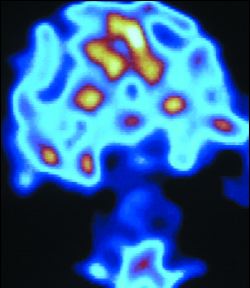 In patients with epilepsy that does not respond to drug therapy, researchers from the University of Uppsala in Sweden reported, “Acceptance and Commitment Therapy (ACT) and yoga decrease seizure index and increase quality of life.” Continue reading ACT and yoga for drug-refractory epilepsy
Psychological treatments reduce back pain
 When psychologists began developing treatments for chronic pain several decades ago, the goal was to help patients live with their pain more successfully.
Now we find it can reduce their level of pain.
Pharmacologists rate CAM for fibromyalgia
Three physicians and high-ranking officials of Cypress Bioscience, Inc. — a company focused on the pharmacotherapy of fibromyalgia — have written a detailed review of fibromyalgia (FMS).
Here’s a summary of their view of non-pharmacological therapy and future challenges. Continue reading Pharmacologists rate CAM for fibromyalgia
Brain changes in OCD associated with CBT
 Cognitive behavioral therapy (CBT) is an established treatment for obsessive-compulsive disorder (OCD). It is equal or perhaps superior to pharmacotherapy.
Now researchers from the University of California at Los Angeles and San Diego have identified changes in the brain that might explain how this happens. Continue reading Brain changes in OCD associated with CBT
Dolly Parton has back pain
It’s so bad that she canceled her concert tour.
Here’s the state-of-the-art (not including pharmacology and surgery) for treating lower back pain (LBP) from the North American Spine Society. Continue reading Dolly Parton has back pain
How does CBT work to treat insomnia?
From the American Psychological Association website, here’s a summary of their view of cognitive behavioral therapy (CBT) and insomnia.
Common misconceptions regarding sleep…
Evidence supports mind-body therapies for headache
 A review published in American Family Physician reveals that mind-body therapies, alone or in combination, significantly reduce symptoms of migraine, tension, and mixed-type headaches.
Here’s the bottom line. Continue reading Evidence supports mind-body therapies for headache
Treating chronic pain in children with rheumatic disease
 Pain is the most common symptom of rheumatic disease (mostly arthritis) in children. This review on Medscape includes cognitive behavioral therapy (CBT) and physical therapy/exercise as complementary options to other, mostly pharmacological treatments.
Continue reading Treating chronic pain in children with rheumatic disease
Official thoughts on behavior therapy and ADHD
 The American Academy of Child and Adolescent Psychiatry (AACAP) has published a new Practice Parameter report on attention-deficit hyperactivity disorder (ADHD). The Practice Parameter represents AACAP’s views on evaluating and treating ADHD.
 What’s this got to do with CAM?
Continue reading Official thoughts on behavior therapy and ADHD