HealthBeat, published by Harvard Health Publications, has an excellent article with solid recommendations about the health benefits and risk of eating seafood.
It’s particularly appropriate in light of recent studies here and here supporting the value of omega-3 fatty acids in pregnant women.
For the second time in less than two months, a study of pregnant women concludes that their babies do better if the women make sure they get enough omega-3 fatty acids during pregnancy.
In this case, “enough” is more than the 340 grams of seafood per week that’s usually recommended.
This time they ate seafood rather than take supplements.
Dr. Kathleen Kendall-Tackett is a health psychologist and a board certified lactation consultant from the University of New Hampshire in Durham. Her work focuses on family violence and perinatal health.
The National Healthy Mothers, Healthy Babies Coalition has summarized the recommendations from official groups, worldwide. Their website should be essential reading for pregnant, breastfeeding, and postpartum women, and women thinking of becoming pregnant.
During the European Society of Human Reproduction and Embryology Annual Meeting in Lyon, France, researchers from Cardiff University reported that women who used complementary therapies while undergoing invitro fertilization (IVF) were 30% less likely to become pregnant than those who used IVF alone. Continue reading Prof. Ernst comes to the defense of CAM→
A survey of midwifes in the United States revealed that 45% used black cohosh to induce labor. The preparation is called “mother’s cordial? or “partus preparatus.” In addition to black cohosh, it contains squaw vine (Mitchella ripens), raspberry (Rubus idaeus), blue cohosh (Caulophyllum thalictroides), and false unicorn (Chamaelirium luteum).
I received some emails promoting Nature Made CholestOff. It contains plant extracts called phytonutrients, specifically phytosterols and phytostanols. They work by reducing the absorption of LDL “bad” cholesterol and total cholesterol from the intestines.
Here are highlights from the 2006 conference of the American Society for Reproductive Medicine in New Orleans.
Writing in Medscape, Dr. Peter Kovacs from the Kaali Institute IVF Center in Budapest and the Albert Einstein College of Medicine in New York says, “Increasing numbers of patients ask about and/or turn to alternative medical solutions when traditional medicine fails.”
According to 2 studies summarized earlier, modifying the dietary intake of omega-3 and -6 fatty acids during early childhood does not change the risk of getting asthma later on.
Now, we have a study of fish, butter, and margarine consumption during pregnancy and development of allergy in the offspring.
In one California fertility clinic acupuncture is standard therapy for 85% of women. Now, three clinical trials published this year report an improved rate of pregnancy among women undergoing in vitro fertilization and acupuncture.
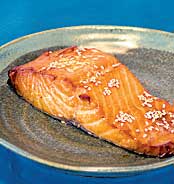 HealthBeat, published by Harvard Health Publications, has an excellent article with solid recommendations about the health benefits and risk of eating seafood.
 The effect of pregnancy on asthma is
 Acupuncture appears to be a common complementary
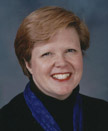 Dr. Kathleen Kendall-Tackett is a health psychologist and a board certified lactation consultant from the University of New Hampshire in Durham. Her
 Garlic (Allium sativum) is one of the most commonly used
 Here’s more evidence that the health of your offspring is influenced by what mom eats while pregnant.
 Relatively high doses of omega 3-rich fish oil
 Let’s see what the Cochrane Collaboration reveals.
 Yes, according to Dr. Timothy McCall who is an editor on Yoga Journal.
 During the European Society of Human Reproduction and Embryology Annual Meeting in Lyon, France, researchers from Cardiff University reported that women who used complementary therapies while undergoing invitro fertilization (IVF) were 30% less likely to become pregnant than those who used IVF alone.
 A survey of midwifes in the United States revealed that 45% used black cohosh to induce labor. The preparation is called “mother’s cordial? or “partus preparatus.” In addition to black cohosh, it contains squaw vine (Mitchella ripens), raspberry (Rubus idaeus), blue cohosh (Caulophyllum thalictroides), and false unicorn (Chamaelirium luteum).
 I received some emails promoting Nature Made CholestOff. It contains plant extracts called phytonutrients, specifically phytosterols and phytostanols. They work by reducing the absorption of LDL “bad” cholesterol and total cholesterol from the intestines.
 Everybody is covering this