 Health Canada is advising consumers not to use this product due to concerns about possible side effects. Continue reading Consumer alert: Lexscl Fat Rapid Loss capsules
Category Archives: J. CONDITIONS TO TREAT
Misperceptions about herbal and dietary supplements among older Americans
 It’s especially important considering that these product routinely have poor quality control and mislabeling problems, as noted here, here, here, and here.
Now, survey results from the University of Missouri-Kansas City School of Medicine document just how confused older Americans are about supplements. Continue reading Misperceptions about herbal and dietary supplements among older Americans
Using the telephone in place of clinic or home visits
 Remote access to patients with chronic heart failure (by telephone or telemonitoring) has a positive effect on health and wellbeing.
Researchers from Australia and Canada reviewed 14 studies of remote monitoring in more than 4000 patients.
Here are the results. Continue reading Using the telephone in place of clinic or home visits
Defining a role for CAM in migraine
 Two recently published reviews on the treatment of migraine outline the role for CAM. Continue reading Defining a role for CAM in migraine
Light treatment for seasonal affective disorder
 In an earlier post on the topic of seasonal affective disorder (SAD), a reader emphasized the importance of recognizing the influence of the circadian pacemaker on depression, and its importance when scheduling light treatment.
So, let’s update the record. Continue reading Light treatment for seasonal affective disorder
An omega-3 enriched liquid egg product lowers triglycerides
 A breakfast containing omega-3 enriched liquid eggs significantly decreased blood triglyceride levels by 32% and the triglyceride:HDL-cholesterol ratio by 37%.
That’s good!
There was also a moderate reduction in blood pressure. By comparison, the control breakfast had no such effects.
Continue reading An omega-3 enriched liquid egg product lowers triglycerides
Got signs and symptoms of mercury poisoning?
 The pros and cons of compact fluorescent lamps (CFLs) can be found here and here. Concern over massive switching from incandescent to CFLs in order to save the environment centers on the risk of toxicity from mercury used in the manufacture of CFLs.
The risk of mercury toxicity is also relevant to CAM in light of the inclusion of mercury in Ayurvedic medicines. Continue reading Got signs and symptoms of mercury poisoning?
Is Lovacor cost-effective therapy?
 The answer (in the UK at least) is yes when taken by patients after their first heart attack. Continue reading Is Lovacor cost-effective therapy?
Homeopathic Arnica montana for post-tonsillectomy pain control
 The patients reported better pain control, but there was no difference in the use of other pain medicines. Continue reading Homeopathic Arnica montana for post-tonsillectomy pain control
Synbiotic 2000 fails to prevent a recurrence of Crohn’s disease following surgery
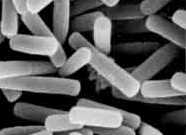 Complications of Crohn’s disease (CD) lead to surgery in 70% to 90% of patients, and most of them experience a relapse.
Synbiotic 2000 consists of a mixture of probiotics and prebiotics. The rationale for its use in this study was to alter the bacteria in the colon and hopefully lower the CD relapse rate after surgery. Continue reading Synbiotic 2000 fails to prevent a recurrence of Crohn’s disease following surgery
Canola is granted a heart health claim by the US FDA
Canola oil and products that contain canola oil can now place the following statement on the label.
“Limited and not conclusive scientific evidence suggests that eating about 1 1/2 tablespoons (19 grams) of canola oil daily may reduce the risk of coronary heart disease due to the unsaturated fat content in canola oil. To achieve this possible benefit, canola oil is to replace a similar amount of saturated fat and not increase the total number of calories you eat in a day.”
Continue reading Canola is granted a heart health claim by the US FDA
Crataegus Extract WS 1442 is not effective congestive heart failure therapy
 In people with advanced congestive heart failure (CHF) WS 1442 (aka, hawthorn) does not change the incidence of death due to progressive heart failure, fatal heart attack, or non-fatal heart attack. It also doesn’t affect the chances of being put in the hospital because of heart failure. Continue reading Crataegus Extract WS 1442 is not effective congestive heart failure therapy
Recommendations to prevent heart disease in diabetics
The American Heart Association and the American Diabetes Association each published guidelines for cardiovascular disease prevention.
Now, they have combined their guidelines, and here are highlights from the recommended lifestyle modifications. Continue reading Recommendations to prevent heart disease in diabetics
The status of marijuana to treat pain and nausea
 Dr. Frederick Burgess, who is clinical associate professor of surgery (anesthesiology) at Brown University in Rhode Island, has these thoughts from the American Academy of Pain Medicine Annual Meeting this past February. Continue reading The status of marijuana to treat pain and nausea
Cannabis does not interact with 2 cancer drugs
Docetaxel (Taxotere) is used to treat breast cancer, while irinotecan (Camptosar) is used to treat cancer of the colon or rectum.
This study shows that medicinal cannabis can be taken with both anticancer agents and does not require adjusting their doses. Continue reading Cannabis does not interact with 2 cancer drugs
Comparing 2 heart-healthy diets
Heartwire reports, “high-risk patients who have survived a first MI [myocardial infarction] can reduce their risk of subsequent cardiovascular events by eating either a Mediterranean-style diet or the low-fat diet recommended by the AHA [American Heart Association], with no differences in risk reduction between the two diets.” Continue reading Comparing 2 heart-healthy diets
Does treatment matter after whiplash?
 “It is unclear whether this, in some cases disabling, condition can be prevented by early intervention,” says Dr. Alice Kongsted from the University of Southern Denmark in Ringe. “Active interventions have been recommended but have not been compared with information only.”
Now they have. Continue reading Does treatment matter after whiplash?
Device-guided paced breathing to lower blood pressure
 Dr. William Elliott who is professor of preventive medicine and internal medicine and pharmacology at Rush Medical College in Chicago believes, “Device-guided paced breathing may offer an effective, simple, and new nonpharmacological option for treating high blood pressure [BP].”
Here’s a summary of clinical studies using the RESPeRATE device. Continue reading Device-guided paced breathing to lower blood pressure
Why not exercise during kidney dialysis?
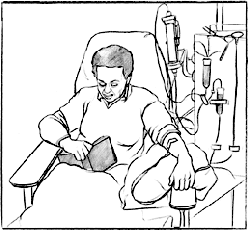 The benefits include increased muscle mass, strength, quality of life, and other aspects of health that are important to people with kidney failure.
Brilliant! Continue reading Why not exercise during kidney dialysis?
Coffee and cholesterol: Experts’ points of view
 In a comment to an earlier entry, Ellen noted that coffee brewed using a French press raises LDL (bad) cholesterol, while filtered coffee does not.
Here is a good summary on the topic from LeisureGuy. Quotes from experts in the field are summarized below. Continue reading Coffee and cholesterol: Experts’ points of view