 Yes, there’s an association. And it doesn’t seem to matter whether the soda pop you drink is “regular” or diet.
But can we rely on these findings? Continue reading Soft drinks and the risk of the metabolic syndrome
Yes, there’s an association. And it doesn’t seem to matter whether the soda pop you drink is “regular” or diet.
But can we rely on these findings? Continue reading Soft drinks and the risk of the metabolic syndrome
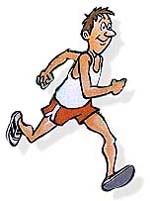 In the short term, exercise alone or exercise plus diet result in more weight loss than diet alone (10 kg [4.5 lb] vs 2 kg [1 lb]).
Here are some other highlights from an article by Dr. John Jakicic, Director of the Physical Activity and Weight Management Research Center at the University of Pittsburgh.
Continue reading The importance of exercise in any weight control program
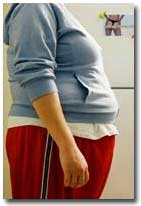 Drs. Victoria Catenacci and Holly Wyatt from the University of Colorado at Denver reviewed the literature and came to the following conclusions. Continue reading The contribution of physical activity to weight loss
So many options, so little success.
You can follow any program you want. But here are some common sense recommendations from NutritionData.com. Continue reading Sound advice for achieving weight loss
 “When I pushed on it, stuff would come out the holes”
“It was real hard for me to open my mouth; it was hard for me to chew and stuff like that. It was just unbearable; I couldn’t sleep on it or anything.”
Yea, it’s hard to overeat when you can’t open your mouth!
Here’s the bottom line from the Mayo Clinic.
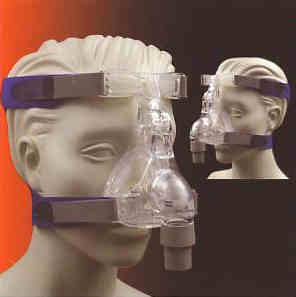 Sleep apnea occurs when people fail to breath while sleeping. Untreated, it can cause high blood pressure and other cardiovascular disease, memory problems, weight gain, impotency, and headaches.
Continuous positive pressure breathing (CPAP) is effective treatment. But it’s uncomfortable to use (photo).
Now, a study shows that cognitive behavioral therapy (CBT) improves acceptance of CPAP. Continue reading Cognitive behavioral therapy used to improve treatment of sleep apnea
 A 12-hour course in Ayurveda is being offered to American medical students, residents, faculty, and practicing physicians. Continue reading Going on the road to introduce Ayurveda to American medical students and physicians
 A telephone survey of more than 11,000 people revealed that about 3% had used CAM in the past 12 months for the purpose of losing weight.
Here are the most common CAM therapies. Continue reading The rationale for yoga for weight reduction
How might cognitive therapy assist? Continue reading Cognitive therapy and weight reduction
Researchers at Rutgers University in New Jersey report that overweight premenopausal women don’t lose bone when they diet if they take the recommended amount of calcium.
Here are the details. Continue reading The value of calcium when premenopausal women diet
 Health Canada is advising consumers not to use this product due to concerns about possible side effects. Continue reading Consumer alert: Lexscl Fat Rapid Loss capsules
 The American Heart Association and the American Diabetes Association each published guidelines for cardiovascular disease prevention.
Now, they have combined their guidelines, and here are highlights from the recommended lifestyle modifications. Continue reading Recommendations to prevent heart disease in diabetics
Chitosan is a pulverized powder made from the shells of shrimp and crab. It was discovered as part of an effort to clean up oil spills.
Its value in blocking fat absorption in humans is controversial. Here are the results from relevant studies.
Continue reading A critical look at chitosan for weight reduction
Yes, they do. But published evidence that they reduce weight is in short supply.
Here is a study of a thermogenic formulation and recent legal actions against weight lose products by the Federal Trade Commission (FTC).
 Medical News Today has the 10 most common myths about diet and exercise.
Here’s one example.
 Over several decades, overweight and obesity have increased in all Amereicans. At the same time there’s been an increased daily intake of 150-300 kcal, with approximately half coming from drinking sweetened beverages.
So, what should we drink?
Continue reading The relationship between beverages and obesity, and what to do about it
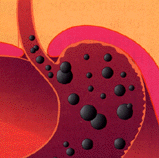 The treatment of gastroesophageal reflux disease (GERD) usually includes lifestyle modifications. These include dietary changes such as avoidance of chocolate, mints, citrus, fatty food, carbonated beverages, tobacco, as well as coffee/caffeinated products. Patients are also advised to lose weight, avoid late evening meals and postprandial recumbent position, and to sleep with their right side down.
Are any of these recommendations useful?
I hate these negative headlines, but there seems to be no upside to the latest survey results on obesity among Americans.
Want to know more?
Continue reading Most obese Americans don’t try to lose weight, and those that try, fail!
 A natural substance in red wine, known as resveratrol (RSV), offsets the unhealthy effects of a high-calorie diet in mice and significantly extends their life span, according to an article published in The International Herald Tribune, and in The Washington Post.
In this study, mice fed the high-calorie diet became “tubby,” while those who got the high-fat diet plus RSV did not. The full study is online at the journal, Cell. (Vol 127, #4, November 16, 2006)
What are the implications?