Research conducted in Malaysia and at Brandeis University shows that a new method of modifying fat in commercial products to replace unhealthy trans fats actually raises blood sugar levels and lowers insulin in humans — common precursors to diabetes.
A new study adds to the mystery of policosanol. Past posts here have summarized the ongoing debate over its effectiveness as a treatment for high cholesterol levels. Studies conducted by the Center of Natural Products at the National Center for Scientific Research in Havana report a dose-dependent reduction in LDL (bad) cholesterol of up to 29%.
Outside of Cuba, the results are inconsistent. One proposed reason is the source of the policosanol.
Any time there is a change in the availability of a statin drug to treat high lipid blood levels, discussions of potential options to these prescription drugs abound.
As Zocor (simvastatin) goes off patent, here is my contribution to the discussion: red yeast rice.
Here in Orange County New York with its “black earth’ and proud agricultural heritage there are festivals this time of year honoring just about every food you grow in the ground or herd on the range.
My town, Monroe, has its cheese festival (although no one actually sells cheese). And the local newspaper lists many more, with the notable exception of beets. This is especially strange considering how close we are to the Borscht Belt.
This blog has chronicled the lipid-lowering effects of policosanol, which lowers LDL (bad) cholesterol levels by 20% to 30%. Its mechanism of action differs from statins. However, it’s close enough that for safety, I would be cautious taking policosanol and a statin at the same time. One-A-Day Cholesterol Plus contains policosanol.
Now, a new study reports that policosanol has a positive effect on recovery in patients with ischemic stroke. This might be an overstatement, but let’s take a closer look.
Medscape just published an article on the benefits of lowering triglycerides, and the use of omega-3 fatty acids. Read it if you’re so inclined, or if you’re an MD and need the continuing education credits. If not, here’s the take-home info.
A previous post reported the American Heart Association’s (AHA) position that soy as a dietary factor has unproven or uncertain effects on cardiovascular disease.
Now, a review of 42 well-designed clinical trials from 1982 through 2004 reports the following positive effects about soy.
“The main voices in favor of DHEA as a miracle drug are those who are selling it or who make a good living selling books or programs advocating ‘natural cures’.” That’s the conclusion from the Skeptics Dictionary. But look for yourself, and you will agree.
Here is another reason to be skeptical of DHEA [dehydroepiandrosterone].
A new book by medical writer, Susan Allport, contends that a little-known family of polyunsaturated fatty acids called omega-6s has permeated the Western diet and nullified the impact of heart disease-fighting omega-3s. You will probably hear more about this book, “The Queen of Fats,” over the next few weeks.
How do these two essential fatty acids compare? Here are some highlights according to the University of Maryland Medical Center website.
An algorithm for treating type 2 diabetes appears in Diabetes Care this month. Here’s a summary of the impressive effects of weight control ? if you can maintain it over the long-term.
In a previous post I reviewed policosanol, which can lower LDL (bad) cholesterol levels by 20% to 30%.
The source of policosanol seems to influence its activity, with Cuban sugar cane-based policosanol being most effective. It’s available on the Internet and in stores. In fact, One-A-Day Cholesterol Plus contains sugar cane-based policosanol.
Now, a study conducted at the University of Kentucky College of Pharmacy shows how it works.
Probiotics reduce cholesterol absorption and increase cholesterol excretion. But it’s unclear if the effect has significance for patients with hypercholesterolemia.
Even as researchers debate its importance, the NIH has awarded an $8 million, five-year grant to evaluate the effects of plant extracts on the metabolic syndrome. Researchers from Rutgers University and the Pennington Biomedical Research Center will grow the plants, determine their active components, and conduct clinical trials.
Here’s some background on the metabolic syndrome and the growing controversy about its relevance.
 Research conducted in Malaysia and at Brandeis University shows that a new method of modifying fat in commercial products to replace unhealthy trans fats actually raises blood sugar levels and lowers insulin in humans — common precursors to diabetes.
 The Palm Oil Council website
 Most disappointing: Why does policosanol reliably lower cholesterol in Cuba but nowhere else?
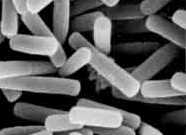 There’s lots of interest in probiotics, so I guess it’s not surprising to see if Lactobacillus fermentum lowers LDL (bad) cholesterol levels.
 Healthcare is expensive, but there is nothing more expensive than paying for drugs that just don’t work.
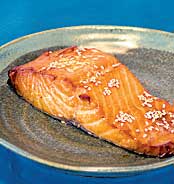 The literature reviews keep piling up. Here are the take home messages from 4 literature reviews of omega-3 fatty acids this year. One positive, three not positive or too soon to tell.
 Here in Orange County New York with its “black earth’ and proud agricultural heritage there are festivals this time of year honoring just about every food you grow in the ground or herd on the range.
 Yoga practice is associated with positive
 A previous
 A new book by medical writer, Susan Allport, contends that a little-known family of polyunsaturated fatty acids called omega-6s has permeated the Western diet and nullified the impact of heart disease-fighting omega-3s. You will probably hear more about this book, “The Queen of Fats,” over the next few weeks.
 An algorithm for treating type 2 diabetes
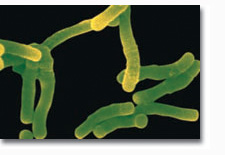 Probiotics
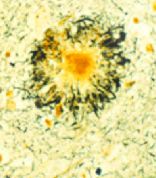 Results from two new studies advance the relationship between diet and Alzheimer’s disease (AD).