 It took place at the University of Connecticut on October 25th. Continue reading Access the Great Homeopathy Debate
Category Archives: Homeopathy
Can homeopathy bring additional benefits to thalassemic patients?
The researchers say yes, particularly in the developing world where blood transfusions suffer from inadequate screening and fall short of the stringent safety standards followed in the developed countries. Continue reading Can homeopathy bring additional benefits to thalassemic patients?
Teaching CAM in allopathic and osteopathic medical schools
 Yes, they teach CAM at osteopathic and allopathic medical schools.
This survey concludes we need less advocacy and more reliance on evidence-based medicine (ie, combining research evidence with clinical expertise and patient values).
Continue reading Teaching CAM in allopathic and osteopathic medical schools
The Great US Homeopathy Debate
 Coming to the University of Connecticut on October 25th. Continue reading The Great US Homeopathy Debate
Homeopathy for ADHD: Two perspectives
There’s interest in homeopathy’s potential as a non-pharmacological treatment for attention deficit/hyperactivity disorder (ADHD).
Here are both allopathic and homeopathic perspectives of the evidence. Continue reading Homeopathy for ADHD: Two perspectives
No more OTC meds to treat colds in children younger than 6 years old?
 “The data that we have now is they don’t seem to work,” said Dr. Sean Hennessy, a University of Pennsylvania epidemiologist and one of the experts who testified to the FDA today.
But what about CAM as an alternative? Continue reading No more OTC meds to treat colds in children younger than 6 years old?
Homeopathy wars in the UK
The UK National Health Service (NHS) is quietly withdrawing funds from homeopathy, according to David Colquhoun who is professor of pharmacology at University College London. The defunding of homeopathy has apparently been taking place since May 2006.
I say adversity breeds opportunity. Read on to learn more.
Continue reading Homeopathy wars in the UK
The benefits of qigong and other CAM for fibromyalgia
 A study at the University of Uppsala, Sweden reports that qigong (chee-kung) has positive and reliable effects regarding fibromyalgia.
Let’s look at these results and review other positive CAM studies in the past year. Continue reading The benefits of qigong and other CAM for fibromyalgia
Sunflower therapy for dyslexia
 It seems to improve self-esteem but not cognition (eg, perception, memory, judgment, and reasoning) or literacy, according to a recent study of 70 dyslexic children aged 6 to 13 years.
Call me skeptical, but…
Use of CAM among children with ADHD
 About 9% of US children age 8 to 15 meet the diagnostic criteria for attention-deficit/hyperactivity disorder (ADHD), but fewer than half receive treatment, according to a report in the September issue of Archives of Pediatrics & Adolescent Medicine.
According to an earlier survey of more than 800 parents of children with ADHD. About 12% of children with diagnosed ADHD and 7% of those suspected of having ADHA use CAM.
 What do they use?
Homeopathy and the memory of water
A long-time reader and valued critic of this site believes this post was not fair. OK. I accept the criticism and challenge him to do better, as stated in the comments below.
The preparation of treatments in homeopathy is based on extremely high dilutions (low concentrations) of substances in water — far lower than detectable. For this reason, it has been suggested that water could retain a “memory” of substances that have been dissolved in it before the successive dilutions.
The journal, Homeopathy has dedicated an entire issue to try to explain the concept. Continue reading Homeopathy and the memory of water
The placebo component of the homeopathic response
There’s increasing awareness that the homeopathic consultation is itself a therapeutic intervention that contributes to the outcome of homeopathic treatments.
So, how important is it?
Continue reading The placebo component of the homeopathic response
Arnica: Not really par excellence
 The website HealthWorld has an article on homeopathy that describes arnica (mountain daisy) as “par excellence” for the treatment of shock or trauma caused by any injury. Although the German Commission E Monograph lists herbal doses of arnica as approved for external use resulting from accidents, it questions arnica’s value in homeopathy, as discussed in this review.
Based on what we know, the frequent reference to arnica as “par excellence” is an overstatement. Continue reading Arnica: Not really par excellence
Ganging up on homeopathy in the UK
Here is an update to an earlier post where many scientists and advocates of evidence-based medicine claimed that giving homeopathy scientific status in the UK is unjustified.
An article in The Guardian reports an intensified effort to stop homeopathic treatment from being funded by the NHS (National Health Service) in the UK. Continue reading Ganging up on homeopathy in the UK
Pushing back against CAM in Italy
Italian physicians, led by former Health Minister, Prof. Umberto Veronesi from the Istituto Europeo di Oncologia di Milano, claim “these therapies risk depriving patients of effective cures, unlike modern medicine, which is based on centuries of science.”
The doctors are particularly concerned about homeopathy, chiropractic, acupuncture, and herbal medicine as examples of “increasingly popular therapies whose usefulness is not certain.” Continue reading Pushing back against CAM in Italy
Attitudes of pharmacy faculty and students toward CAM
 Overall, they are positive, at least at the University of Minnesota. Continue reading Attitudes of pharmacy faculty and students toward CAM
Should homeopathy be included in pharmacy school curricula?
 As drug experts, pharmacists are expected to counsel patients on the safe and effective use medicine, which technically includes homeopathic products.
Considering that many pharmacists feel that homeopathy is based on unscientific theories that lack supporting evidence, is this a reasonable expectation? Continue reading Should homeopathy be included in pharmacy school curricula?
Reviewing CAM to treat Meniere’s disease
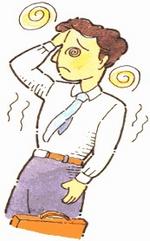 Meniere’s disease is characterized by deafness, ringing in the ears, dizziness, and nausea. Because the precise cause is unknown, most treatments are limited to treating symptoms.
Here’s a summary of CAM options from a review in The Internet Journal of Otorhinolaryngology.
Evidence for Vertigoheel to treat vertigo
Vertigo is a dizzying sensation of tilting or being in tilting or spinning surroundings.
Vertigoheel is a homeopathic product. It contains Ambra grisea, Anamirta cocculus, Conium maculatum, and Petroleum rectificatum.
Recently, a review of its effectiveness was published.
Homeopathic vs conventional primary care
Here is a large study conducted at 57 primary care clinics in the US and Europe. It shows that “in primary care, homeopathic treatment for acute respiratory and ear complaints was not inferior to conventional treatment.”