In April, GlaxoSmithKline filed a citizen’s petition with the FDA asking the agency to treat weight loss claims for dietary supplements as disease claims.
This is the 2nd time in 2 days I’ve seen “palliative care†applied to the care or patients who are not at the end of life.
“If the relation with pain is causal, palliative care could increase the quality of life and range of activities in which people participate,” say researchers from Princeton University in New Jersey and Stony Brook, New York. Continue reading Applying palliative care to pain management→
For the treatment of acute low back pain, “improvements using NSAIDs [nonsteroidal anti-inflammatory drugs] vs placebo are modest, and whether NSAIDs confer greater benefit than acetaminophen (paracetamol, Tylenol) is controversial,” according to Dr. Charles Vega from the University of California, Irvine.
The American Thoracic Society has published recommendations for combining palliative with standard care in patients with chronic and advanced respiratory tract illnesses or critical disease.
Studies dating back more than 15 years suggest that people with depression are likely to have low blood levels of folic acid (or folate) and vitamin B12.
Of course, not all of the researchers have come to the same conclusion. But to start, here’s a summary of the most positive analysis of folic acid and B12.
In 1993, Dr. Charles Morin published the results of research in 24 older adults with insomnia. He found that 8 weeks of cognitive-behavior therapy (CBT) improved their insomnia.
The British Association for Psychopharmacology does not rank massage among CAM options for dementia. Apparently, there are too few studies available for them to evaluate.
 In April, GlaxoSmithKline filed a citizen’s petition with the FDA asking the agency to treat weight loss claims for dietary supplements as disease claims.
 In this
 You’ll have to join to get more details, but here are the top line
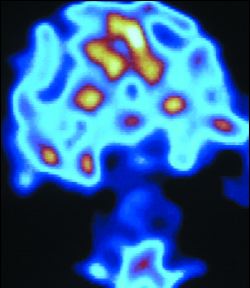 Researchers from the Institute of Child Health in London
 In an earlier
 This is the 2nd time in 2 days I’ve seen “palliative care†applied to the care or patients who are not at the end of life.
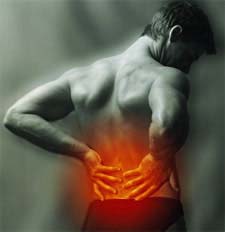 For the treatment of acute low back pain, “improvements using NSAIDs [nonsteroidal anti-inflammatory drugs] vs placebo are modest, and whether NSAIDs confer greater benefit than acetaminophen (paracetamol, Tylenol) is controversial,” according to Dr. Charles Vega from the University of California, Irvine.
 Baby massage has a positive effect on the mood status of mothers, according to a recent
 The American Thoracic Society has published recommendations for combining palliative with standard care in patients with chronic and advanced respiratory tract illnesses or critical disease.
 Thumbing through the August 2007 issue of Cat Fancy magazine, I found an article with the following caveats.
 Here’s a
 Researchers from Alfa Institute of Biomedical
 Studies dating back more than 15 years suggest that people with depression are likely to have low blood levels of folic acid (or
 Papworth method is a sequence of breathing and relaxation exercises developed at Papworth Hospital in Cambridgeshire in the 1960s.
 In 1993, Dr. Charles Morin published the results of research in 24 older adults with insomnia. He
 Traumeel is a homeopathic anti-inflammatory and analgesic preparation containing 12 botanicals and 2 minerals.
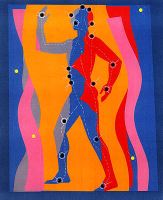 Maybe if we do a bigger, better, study…
 The British Association for Psychopharmacology does not