British and American guidelines recommend early referral to spinal manipulation to reduce the proportion of patients developing chronic complaints. Dutch guidelines discourage it.
When psychologists began developing treatments for chronic pain several decades ago, the goal was to help patients live with their pain more successfully.
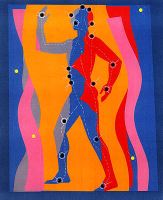
Dr. Paul White from the University of Texas Southwestern Medical Center in Dallas has reviewed the medical literature and published a summary of the state of the art of acupuncture to manage pain. Continue reading Summarizing benefits of acupuncture→
Prolotherapy involves injecting an otherwise non-pharmacological and non-active irritant solution into the body — generally in the region of tendons or ligaments — to strengthen weakened connective tissue and alleviate musculoskeletal pain.
Dr. Peter Stanton has commented before on this blog. He’s a board certified chiropractic orthopedist practicing in Burke, Virginia and graciously sent a list of studies that support chiropractic for back pain.
I listed the two studies first and the two reviews next.
Clinical Practice Guidelines for the diagnosis and treatment of low back pain have been published in the Annals of Internal Medicine by the American College of Physicians and the American Pain Society.
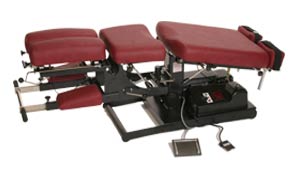
“Flexion-distraction [FD] involves the use of a specialized table [see photo] that gently distracts or stretches the spine,” says Dr. Arn Strasser from the Center for Chiropractic & Pain Rehabilitation in Portland, Oregon.
OK, but how does it compare to an active trunk exercise (ATE) protocol (see photo below) as performed by physical therapists?
Conflicting findings on the effectiveness of acupuncture are often attributed to flaws in study design and methods. The German Acupuncture Trials (GERAC) were intended to demonstrate that it’s possible to design acupuncture studies in accordance with the standards of good clinical practice.
Merck, the pharmaceutical company, announced a voluntary worldwide withdrawal of Vioxx (rofecoxib) in 2004. It was effective for relieving signs and symptoms of arthritis, acute pain in adults, and painful menstrual cycles. But the risk of heart attack or stroke related to Vioxx was high enough to cause Merck to stop selling the drug.
Now, a review of the literature suggests that Harpagophytum procumbens (Devil’s claw) and Salix alba (White willow bark) are as effective.
Narcotic drugs (opioids) are commonly prescribed for short-term relief of chronic back pain, but their long-term (greater than 16 weeks) effectiveness has never been proved.
 British and American guidelines recommend early referral to spinal manipulation to reduce the proportion of patients developing chronic complaints. Dutch guidelines discourage it.
 Lessons in the Alexander technique from registered teachers have long-term benefits,
 The reviewers
 This
 Panda Bear is a
 By the end of this
 Not much evidence is available. But here’s what 2 researchers from the University of Pittsburgh in Pennsylvania discovered during their
 Dr. Paul White from the University of Texas Southwestern Medical Center in Dallas has
 Anthroposophy is a philosophy that maintains your response to your surroundings can be modified by virtue of a prescribed method of self-discipline.
 Dr. Peter Stanton has
 “Flexion-distraction [FD] involves the use of a specialized table [see photo] that gently distracts or stretches the spine,”