ConsumerLab.com has reported the results of quality control tests on black cohosh supplements, soy and red clover isoflavone supplements, and progesterone creams.
Here’s a review by researchers at the University of Illinois, Chicago that focuses on the scientific support for the use of herbals in women during menopause. It differs a bit in its conclusions from a more general review posted here recently.
Hochu-ekki-to (TJ-41) is an herbal medicine that contains a mixture of 10 medicinal plants (listed below). It’s produced by Tsumura Co., Ltd. in Tokyo, which specializes in selling Kampo medicine — the adaptation of traditional Chinese medicine to Japanese culture.
Researchers at the University of Pennsylvania School of Medicine in Philadelphia reviewed the records of about 2500 women — some with and others without breast cancer.
Concern that black cohosh, a popular alternative to prescription hormonal therapy for treating menopausal symptoms, can cause liver toxicity has prompted agencies in the U.K. and Australia to require manufacturers to add safety warnings to their labels.
Drs. Luigi Gori and Fabio Firenzuoli from the Center of Natural Medicine, S. Giuseppe Hospital in Italy think the European Medicines Agency (EMEA) and the Committee on Herbal Medicinal Products (HMPC) erred in their assessment of the risk of liver toxicity to Cimicifugae racemosae rhizoma (black cohosh, root). Continue reading Differing point of view on black cohosh and liver toxicity→
A United States Pharmacopeia (USP) Committee has reviewed reports that suggest a link between liver damage and the use of products that contain green tea extracts and black cohosh.
A survey of midwifes in the United States revealed that 45% used black cohosh to induce labor. The preparation is called “mother’s cordial? or “partus preparatus.” In addition to black cohosh, it contains squaw vine (Mitchella ripens), raspberry (Rubus idaeus), blue cohosh (Caulophyllum thalictroides), and false unicorn (Chamaelirium luteum).
The Zoft Gum Company, which makes several herbal supplement chewing gums (eg, breast enlargement, weight reduction) has introduced a new gum to help manage the symptoms of menopause.
There are no studies of this gum for treating menopausal symptoms in women. And the discussion of the gum’s ingredients on the Zoft website is misleading.
This site has discussed black cohosh before. Our focus was on the lack of effectiveness for the treatment for menopausal symptoms, and the lack of manufacturing standards that result in variability in product content of black cohosh.
Now, following an analysis of 16 case reports of hepatotoxicity associated with the use of Cimicifugae racemosae rhizoma (black cohosh, root), the European Medicines Agency has advised consumers to stop taking black cohosh and consult their doctor immediately if they develop signs and symptoms suggestive of liver injury. Examples include tiredness, loss of appetite, yellowing of the skin and eyes, or severe upper stomach pain with nausea and vomiting or dark urine.
 ConsumerLab.com has reported the results of quality control tests on black cohosh supplements, soy and red clover isoflavone supplements, and progesterone creams.
 Dr. Cathi Dennehy from the Department of Clinical Pharmacy at the University of California San Francisco has reviewed the evidence.
 Based on this safety
 Prof. Ernst has
 Here’s a
 Researchers at the University of Pennsylvania School of Medicine in Philadelphia
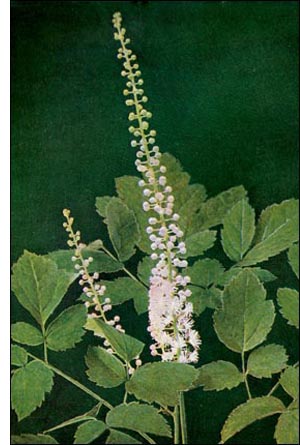 Concern that black cohosh, a popular alternative to prescription hormonal therapy for treating menopausal symptoms, can cause liver toxicity has prompted agencies in the U.K. and Australia to
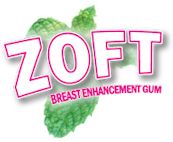 The Zoft Gum Company, which makes several herbal supplement chewing gums (eg, breast enlargement, weight reduction) has