Alternative & Complementary Therapies has a review of biofeedback by Dr. Sala Horowitz. In it she includes a table that rates the value of biofeedback to treat selected conditions based on the available research.
Temporomandibular joint (TMJ) dysfunction involves face pain, clicking sounds, and limited movement of the jaw. About 33% of the population has it; fewer need treatment.
This study suggests that cognitive behavioral therapy plus biofeedback is cost-effective treatment.
Three criteria determine drug reimbursement decisions: therapeutic value, cost effectiveness, and burden of disease. Now, an article from Erasmus University in The Netherlands questions whether it’s sufficient for a drug to meet these criteria, and proposes a 4th hurdle.
Narcotic drugs (opioids) are commonly prescribed for short-term relief of chronic back pain, but their long-term (greater than 16 weeks) effectiveness has never been proved.
Earlier posts here, here, and here, discussed biofeedback and constipation. Here’s a study in people with incontinence where more than 70% demonstrated improvement.
The researchers start by telling us “biofeedback is well established as a treatment for fecal incontinence.” This study assessed short-term outcomes and predictors of treatment success.”
First the details.
The researchers at the Royal Prince Alfred Hospital in Sydney, Australia reviewed 513 consecutive patients treated with biofeedback over 10 years.
And the results.
Each outcome improved for more than 70% of patients.
Incontinence scores decreased 32%.
Quality of life improved by 89%.
Maximum anal sphincter pressure increased 12 mmHg (14%).
Treatment success was more likely in women, older people, and people with more severe incontinence.
It claims to be “the most comprehensive, current, well-balanced, and trustworthy information available from both a scientific and a biblical perspective.”
Here’s the premise for Alternative Medicine: The Christian Handbook, by Donal O’Mathuna and Walt Larimore, MD
A study from the University of Pennsylvania reports that transcendental meditation (TMed) “can be effective in improving the quality of life and functional capacity of African American CHF [congestive heart failure] patients.”
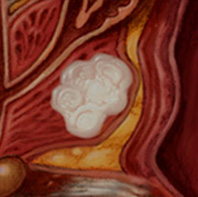
Radical prostatectomy is an operation to remove the prostate gland and some of the tissue around it. It is done to treat prostate cancer, and up to half of all men who have a radical prostatectomy develop urinary incontinence.
Preoperative pelvic floor training (PFT) is used to strengthen the muscles and improve recovery of continence following the operation.
A recent review of published studies concludes that practicing biofeedback is associated with a reduction in the frequency of migraine attacks. And better results are achieved when biofeedback is combined with home sessions.
 Alternative & Complementary Therapies has a review of biofeedback by Dr. Sala Horowitz. In it she includes a table that rates the value of biofeedback to treat selected conditions based on the available research.
 The Cancer Integrative Medicine Program at Rush University Medical Center focuses on dealing with the emotional, psychological, and spiritual effects of cancer.
 Temporomandibular joint (TMJ) dysfunction involves face pain, clicking sounds, and limited movement of the jaw. About 33% of the population has it; fewer need treatment.
 Three criteria determine drug reimbursement decisions: therapeutic value, cost effectiveness, and burden of disease. Now, an
 Narcotic drugs (opioids) are commonly prescribed for short-term relief of chronic back pain, but their long-term (greater than 16 weeks) effectiveness has never been proved.
 It claims to be “the most comprehensive, current, well-balanced, and trustworthy information available from both a scientific and a biblical perspective.”
 This is the second study in 2 months to report a positive effect with biofeedback to treat pelvic floor dyssynergia-type constipation.
 A study from the University of Pennsylvania reports that transcendental meditation (TMed) “can be effective in improving the quality of life and functional capacity of African American CHF [congestive heart failure] patients.”
 Rumination is the voluntary or involuntary regurgitation and rechewing of partially digested food that is either reswallowed or expelled.
 Radical