The latest recommendations for the routine care of people with pre-existing cardiovascular disease were published last month in the Journal of the American College of Cardiology.
If you have coronary heart disease, here is what you can expect to hear from your primary care physician or cardiologist.
According to the distributor’s website, “Raindrop combines the art of aromatherapy with the techniques of Vita Flex and massage in the application of essential oils to various areas of the body to bring structural and electrical alignment.” A description of the treatment is described here.
A just published survey of the medical literature found that moderate to high physical activity was associated with a lower risk of erectile dysfunction (ED).
The authors rightly caution, “the apparent ‘protective’ effect of physical activity on ED should be further investigated.” But, considering the many benefits of increased physical activity, it’s probably not too early to reconsider the disadvantages of a sedentary lifestyle.
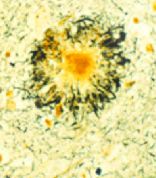
There is evidence that abnormal concentrations of positively-charged metal ions (eg, copper, iron, and zinc) interact with beta-amyloid in the brain during the development of Alzheimer’s disease. Therefore, correcting these abnormal levels might help people with this disease. (The photo shows yellow amyloid plaque surrounded by black neurofibrillary tangles.)
Making the rounds this morning is a Newswire release from MD Anderson Cancer Center about Cherie Perez. She’s a research nurse who teaches aromatherapy to cancer patients during their treatment at the Cancer Center. You can read it here.
Since my background is based in traditional medicine, the involvement of this prestigious medical center sparks my interest to learn more about aromatherapy. I start by looking for structure.
It turns out, there are lots of ways to use oils.
Here, from Psychology Today are the five common types of aromatherapy.
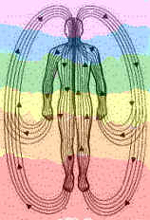
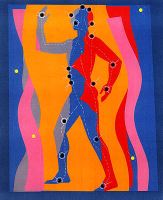
In the Polarity model, “health is experienced when energy systems function in their natural state,” according to the “American Polarity Therapy Association (APTA).
Sounds good. And in a study of 15 women undergoing radiation therapy for breast cancer there was a statistically significant improvement in cancer-related fatigue and health-related quality of life.
A literature review by Dr. Guy Faulkner from the University of Toronto reveals that adding exercise to standard care (counseling and/or nicotine replacement therapy) increases short-term smoking abstinence.
Unfortunately, the evidence is not good for long-term abstinence. A Cochrane review concluded, “only one of 11 trials offered evidence for exercise aiding smoking cessation at a 12-month follow up.”
The International Council on Active Aging and AARP will sponsor Active Aging Week, September 25th to October 1st.
I mention it because one of the sponsors offers a locator for “age-friendly” fitness centers. It’s designed to help people over 50 find a gym or a health club. It’s unclear what they do to make themselves “age-friendly,” however.
In 1995, the American Medical Student Association prepared an introductory guide to complementary medicine.
It is available online at no charge. And it’s still the first place to turn for introductory information on everything from art therapy, to osteopathy, chiropractic, chelation therapy, and more.
Most of the benefits reported with Reiki are based on the personal experiences of those who receive treatment and those who administer it.
Several years ago I met Michael W. Smith, a Reiki (pronounced “ray-key”) master in practice at the Women’s Place at Carroll County General Hospital in Westminster, Maryland. I interviewed him and later wrote two articles.
The first was an edited transcript of our conversation covering the basics of Reiki.
The essential Reiki
Reiki levels and attunement
A Reiki treatment session
The appropriate role for Reiki treatment today
The second article describes the effect of reiki on a woman with Alzheimer’s disease. It also compares Reiki to touch therapy and massage.
Taken together, they are, if I say so myself, a good way to begin to understand this form of complementary therapy.
A while ago I posted on a study that showed no difference in outcome between traditional Chinese acupuncture and sham acupuncture. Both interventions were a positive addition to physiotherapy and anti-inflammatory drugs.
Now, a study of sham acupuncture in adults with arm pain shows no difference compared to placebo tablets — neither worked.
But that’s just phase 1 of the study. Now it gets interesting.
In 2004, a study in patients with chronic stable congestive heart failure (CHF) showed that supplementation with l-arginine taken by mouth prolongs exercise duration. It was thought this might be due to nitric oxide-induced dilation of blood vessels in peripheral areas of the body.
Exercise and diet can reduce neuropathic pain and help regenerate nerve fibers in overweight patients with impaired glucose tolerance (“Prediabetes”), according to research that was presented at the 2006 American Academy of Neurology 58th Annual Meeting.
Details of the study are reported here, and a review of the topic is presented here.
More than 1000 patients with chronic pain for at least 6 months due to osteoarthritis of the knee received up to 6 physiotherapy sessions and as-needed anti-inflammatory drugs. In addition, they were randomly assigned to receive 10 sessions of traditional Chinese acupuncture (TCA) or sham acupuncture from experienced acupuncture therapists, or 10 physician visits within 6 weeks.
The inclusion of acupuncture led to greater improvement in Western Ontario and McMaster Universities Osteoarthritis Index (WOMAC) scores and physical functioning at 26 weeks.
But here is the point. (Sorry, I couldn’t help my self.) There was no significant difference in improvement between TCA and sham acupuncture. The researchers concluded that one explanation for the lack of any observed differences could be the physiologic effect of needling regardless of whether it is done according to TCA principles. Further analysis is provided here.
7/11/06 23:03 JR
Complementary and Alternative Medicine: Fair, Balanced, and to the Point
 The latest recommendations for the routine care of people with pre-existing cardiovascular disease were published last month in the Journal of the American College of Cardiology.
 According to the distributor’s
 A just published survey of the medical literature
 There is evidence that abnormal concentrations of positively-charged metal ions (eg, copper, iron, and zinc) interact with beta-amyloid in the brain during the development of Alzheimer’s disease. Therefore, correcting these abnormal levels might help people with this disease. (The photo shows yellow amyloid plaque surrounded by black neurofibrillary tangles.)
 In the Polarity model, “health is experienced when energy systems function in their natural state,”
 A literature
 The International Council on Active Aging and AARP will
 In 1995, the American Medical Student Association prepared an introductory
 Most of the benefits reported with Reiki are based on the personal experiences of those who receive treatment and those who administer it.
 When tai chi is adapted to the needs of patients with multiple sclerosis (MS), the slow, gentle movements help improve muscle tone.
 A while ago I posted on a
 In 2004, a