Dr. Jamaluddin Moloo is Chief of the Department of Medicine at Palmetto Health Richland Memorial Hospital in Columbia, South Carolina. He has reviewed the evidence and finds it lacking.
 Medscape reports that SELECT (Selenium and Vitamin E Cancer Prevention Trial) is asking more than 35,000 adult men to stop taking these supplements because of an apparent lack of benefit and a possibility of harm.
The U.S. Food and Drug Administration advises not to purchase or consume Total Body Formula in the flavors of Tropical Orange and Peach Nectar, or Total Body Mega Formula in the Orange/Tangerine flavor.
Ten years ago, the late Dr. William Fair, a surgeon at the Memorial Sloan-Kettering Cancer Center and CAM advocate wrote, “epidemiologic and laboratory evidence increasingly demonstrate that nutritional factors, especially reduced fat intake, soy proteins, vitamin E derivatives, and selenium, may have a protective effect against prostate cancer.”
Now, Steffen Theobald, a nutritional consultant and manager at the Scientific Association for the Improvement of Patient Competence in Germany updates the role of nutrition in the development, prevention, and treatment of prostate cancer.
The National Healthy Mothers, Healthy Babies Coalition has summarized the recommendations from official groups, worldwide. Their website should be essential reading for pregnant, breastfeeding, and postpartum women, and women thinking of becoming pregnant.
Results from the Invecchiare in Chianti (InCHIANTI) Study indicate that low selenium blood levels are independently associated with poor skeletal muscle strength — at least in Tuscany.
A recently published study concluded, “Selenium supplementation does not seem to prevent type 2 diabetes, and it may increase risk for the disease.”
The study was summarized here. Now, an article on HealthNotesNewswire by Dr. Allan Gaby, a specialist in nutrition and preventive medicine, lists criticisms of the research. Dr. Gaby’s article is instructive because in addition to the relevance of the criticisms to the selenium study, it provides a checklist of basic questions to ask when reading any retrospective review. Continue reading More thoughts on the role of selenium in preventing diabetes→
That’s right. Treatment with beta-carotene, vitamin A, and vitamin E might increase mortality. The potential roles of vitamin C and selenium on mortality need further study.
These are the findings from the latest literature review and analysis published in The Journal of the American Medical Association (JAMA).
The University of Arizona Cooperative Extension has an excellent review of calcium supplements. It is well written, thorough, and concise — just 4 pages long. The part I like best is the discussion of the difference between elemental and total calcium.
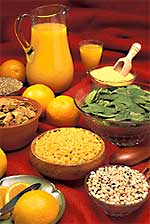
A study in northern India shows that milk fortified with specific micronutrients lowers the risk of diarrhea and acute lower respiratory illness in children.
After a single test showing a raised level of prostate-specific antigen, a 75-year-old man became concerned about prostate cancer. He researched prostate cancer on the Internet and discovered that selenium may have a role in its prevention and treatment. He purchased sodium selenite powder and tablets from two separate pharmacies. Overdosed himself, and died in the hospital intensive care unit about 5 hours later.
According to Eric Jacobs, a senior epidemiologist and vitamin specialist with the American Cancer Society, “There is no vitamin or mineral supplement proven to reduce the risk of cancer.”
A string of negative results summarized in an Associated Press story are depressing.
A review of observational studies has concluded that higher selenium concentrations in blood are associated with a lower risk of heart disease and vice versa.
But the most important statement in the report is the next one.
 Dr. Jamaluddin Moloo is Chief of the Department of Medicine at Palmetto Health Richland Memorial Hospital in Columbia, South Carolina. He has reviewed the evidence and finds it lacking.
 Â Medscape
 Selenium is a simple, inexpensive, and safe adjunct therapy in HIV spectrum disease.
 Ten years ago, the late Dr. William Fair, a
 The National Healthy Mothers, Healthy Babies Coalition has
 A recently published
 A news
 The University of Arizona Cooperative Extension has an excellent
 A study in northern India
 A