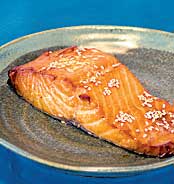
 Modest consumption of fish — one to two servings a week — may reduce the risk of coronary death by 36% and the actual death rate by 17%, according to Harvard researchers.
But what about the risk from mercury?
Modest consumption of fish — one to two servings a week — may reduce the risk of coronary death by 36% and the actual death rate by 17%, according to Harvard researchers.
But what about the risk from mercury?
 “Many chiropractors and other manipulative therapists purport to treat autism and related disorders with good improvements,” according to a review in Clinical Chiropractic.
Aside from case reports, support for the role of chiropractic is limited to one study in 26 autistic children who were followed for 9 months.
Here are the results.
Continue reading Chiropractic and autism: What’s the evidence?
 Here’s a disturbing report.
After a single test showing a raised level of prostate-specific antigen, a 75-year-old man became concerned about prostate cancer. He researched prostate cancer on the Internet and discovered that selenium may have a role in its prevention and treatment. He purchased sodium selenite powder and tablets from two separate pharmacies. Overdosed himself, and died in the hospital intensive care unit about 5 hours later.
What are we to learn from this sad case?
Continue reading Death after using selenium to treat suspected prostate cancer
 Verbal claims are common practice in health food stores, despite the lack of either written claims and/or proof of efficacy for most of them.
In this study, the number and type of verbal claims for natural health products (NHP) made by pharmacists were compared to those made by health food stores personnel.
Continue reading Comparing advice from pharmacists and clerks in a health food store
 Here’s why this is important.
Here’s evidence that tai chi helps.
Continue reading Tai chi lowers the risk of falls in the elderly
 Morbidity and Mortality just reported the latest prevalence of rheumatoid arthritis (RA). This survey of more than 90,000 adults between 2002 and 2005 found the following.
The National Center for Complementary and Alternative Medicine (NCCAM) lists thunder god vine (Tripterygium wilfordii Hook F; TWHF) first among all the CAM options for RA. The reason for this is unclear unless it’s to warn us about its safety.
Continue reading Arthritis prevalence and the non-role of thunder god vine
 A review article published in 2001 identified 8 clinical studies in which St. John’s wort was more effective than placebo in treating mild to moderate depression. “The absolute increased response rate with the use of St. John’s wort ranged from 23% to 55% higher than with placebo, but ranged from 6% to 18% lower compared with tricyclic antidepressants.”
 As municipalities ban smoking at workplaces and in public buildings, evidence of the benefits are beginning to appear in the press.
 Earlier this year, the FDA approved Anthelios SX, an over-the-counter product that contains a camphor derivative (ecamsule/Mexoryl SX), which is photostable and targets UVA radiation. In addition, Neutrogena has added a stabilizer, Helioplex, to several of its products containing avobenzone and other UVA blockers, which might boost their efficacy in protecting against a spectrum of UVA wavelengths.
The questions are, “How good are they? Which is better?” asks Dr. DeLeo from St. Luke’s-Roosevelt and Beth Israel Medical Centers in New York City.
 A recent study reported that self-acupuncture was associated with long-term relief of vasomotor symptoms (hot flushes) in patients with breast cancer or prostate cancer who are undergoing anticancer therapy.
Unfortunately, this does not seem to apply to women in perimenopause.
Here are the details of a recent study.
Continue reading Acupuncture not effective in perimenopausal women with hot flashes.
 “Behind the funny name of horny goat weed stands a time-tested aphrodisiac that increases libido in men and women, and improves erectile function in men.” so starts a pleasant story by Chris Kilham published on the Discovery Health Channel website.
 Biofeedback relaxation training (BFRT) is a tool for stress management. Background information on the relationship between stress and disease, the theory of BFRT and its application to smoking cessation; asthma; binge eating, obesity, and stress; as well as hypertension and cardiovascular disease is available on the LookSmart website.
Be forewarned, this is a long article (more than 5000 words) and a bit dry. But it is worth the time if you are considering BFRT to complement ongoing treatment for the diseases listed above.
6/24/06 9:25 JR
 Drinking tea is associated with stress relief, and many people believe that it helps them relax after facing a stressful day. Now, we have scientific evidence for the relaxing properties of black tea.
Here are the details of the study.
Continue reading Yes, black tea helps relieve stress
 An earlier post summarized the positive results from a study conducted in the UK on this topic. Now a review of the literature adds further support for hypnotherapy in patients with irritable bowel syndrome (IBS).
Here are the details.
Continue reading More positive results for hypnotherapy for IBS
 One million of the 35 million patients hospitalized in the U.S. each year develop an infection that can be traced to the hospital environment. Bacterial infections are also responsible for 30% of all cases of food poisoning each year. So it’s important to find simple yet effective ways to reduce this risk.
Continue reading Wearing special gloves might decrease the risk of spreading infections
Here’s a series of quotes from the October (Volume 12, 2006) editorial in Alternative Therapies in Health and Medicine that I think contrasts the points of view between alternative and mainstream medicine today. Is the alternative perspective too esoteric to be of practical value? Or is the mainstream approach (for chronic diabetes for example) destined to come up short? Or is the answer somewhere in the middle?
Continue reading A problem endemic to clinical medicine: treating the symptoms, not the cause
According to Eric Jacobs, a senior epidemiologist and vitamin specialist with the American Cancer Society, “There is no vitamin or mineral supplement proven to reduce the risk of cancer.”
A string of negative results summarized in an Associated Press story are depressing.
 A review of observational studies has concluded that higher selenium concentrations in blood are associated with a lower risk of heart disease and vice versa.
But the most important statement in the report is the next one.
Continue reading Does selenium really lower heart disease risk?
 Garlic supplements are one of the most popular herbal products in the U.S. Garlic has been described as a wonder food. It reportedly lowers cholesterol, prevents dangerous blood clots, reduces blood pressure, prevents cancer, and protects against bacterial and fungal infections.
Holy nutraceutical, Batman!
Yet, when ConsumerLab tested 16 brands of garlic supplements, they found that one product lacked any of a key garlic compound. Another had less than 1% of the expected amount of this compound. In all, 8 of the 16 products failed testing.
Continue reading Are you trusting your health to garlic supplements?
 There have been lots of posts here on probiotics and their effects in a wide range of infections of the GI tract. Probiotics are an appealing concept given their favorable safety profiles.
Now, a summary of clinical trials has been published.
Here are the findings.
Continue reading Current status of probiotics to treat gastrointestinal infections