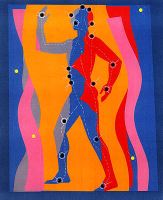
Look at the list of posts on this site, and it becomes apparent that acupuncture has a problem showing that it’s effective treatment. People looking for any sign of effectiveness can conclude that acupuncture has a role in treating this or that disease, while those who are more skeptical — well, you know.
? This graph shows the consistent year-to-year increase in the number of randomized clinical trials in CAM based on a MEDLINE search between 1982 and 2002. There has also been an increase in the number of systematic reviews and META analyses during the same period.
The information can be found online at Complementary and Alternative Medicine in the United States, which is a publication of The National Academies Press.
Any time there is a change in the availability of a statin drug to treat high lipid blood levels, discussions of potential options to these prescription drugs abound.
As Zocor (simvastatin) goes off patent, here is my contribution to the discussion: red yeast rice.
For as long as I’ve followed the ConsumerLab.com website, I don’t remember them ever testing a supplement and reporting that the contents of all brands tested contained what was on the label.
Now, they report that among 12 zinc lozenges and supplements tested, all contained the amounts listed on the label. But some of the lozenges did not provide a dosage known to be effective for treating colds.
Here in Orange County New York with its “black earth’ and proud agricultural heritage there are festivals this time of year honoring just about every food you grow in the ground or herd on the range.
My town, Monroe, has its cheese festival (although no one actually sells cheese). And the local newspaper lists many more, with the notable exception of beets. This is especially strange considering how close we are to the Borscht Belt.
 Look at the list of posts on this site, and it becomes apparent that acupuncture has a problem showing that it’s effective treatment. People looking for any sign of effectiveness can conclude that acupuncture has a role in treating this or that disease, while those who are more skeptical — well, you know.
 ? This
 For as long as I’ve followed the ConsumerLab.com
 I love the
 Here is a
 Â People with HIV/AIDS commonly take herbals and vitamins, often without the knowledge of their doctor.
 Here in Orange County New York with its “black earth’ and proud agricultural heritage there are festivals this time of year honoring just about every food you grow in the ground or herd on the range.