Young patients with cancer commonly use CAM, yet only about half of them discuss CAM with their oncologist, according to researchers at Albert Einstein College of Medicine in the Bronx, New York.
In seniors there’s a difference between the role of omega-3 fatty acids to slow cognitive decline vs preventing or treating dementia, according to researchers at Johns Hopkins School of Medicine in Baltimore, Maryland. Continue reading Reviewing the effect of omega-3 on dementia→
 Dr. Darcy DeLoach Walworth from Florida State University studied the effect of music therapy on premature infants’ and full term infants’ developmental responses and parents’ responsiveness. Continue reading Effect of music therapy on infants→
In May 2008, researchers from the University of Wyoming in Laramie studied urinary oxalate excretion from supplemental doses of cinnamon and turmeric.
When oxalic acid in plants combines with calcium, iron, sodium, magnesium, or potassium it forms insoluble crystals called oxalates, which are deposited in the kidneys and lead to the formation of “stones.” Continue reading Turmeric and the risk of kidney stones→
During the annual meeting of the American Academy of Neurology this April, researchers from Stanford University, in California will report, “Women who have multiple sclerosis (MS) may reduce their risk for relapse after pregnancy if they breast-feed.”
Researchers from the University of Waterloo in Canada tell us that increased intake of omega-3 fatty acids “is associated with the decreased risk and incidence of several morbidities afflicting the elderly, including cognitive decline, dementia, rheumatoid arthritis, and macular degeneration.”
A recent study casts doubt on the ability of ginkgo biloba to affect blood flow in the eye. This might be important for people with cataracts and glaucoma, but the findings are at odds with the prevailing point of view.
File this under the category, “how little we really know.”
Results from a study by researchers at the National Cancer Institute in Bethesda, Maryland do “not support the hypothesis that vitamin D is associated with decreased risk of prostate cancer; indeed, higher circulating 25(OH)D [vitamin D] concentrations may be associated with increased risk of aggressive disease.” Continue reading Vitamin D does not protect from prostate cancer→
 Young patients with cancer commonly use CAM, yet only about half of them discuss CAM with their oncologist, according to researchers at Albert Einstein College of Medicine in the Bronx, New York.
 In seniors there’s a difference between the role of omega-3 fatty acids to slow cognitive decline vs preventing or treating dementia,
 Â Postherpetic neuralgia is a painful complication of herpes zoster (shingles).
 Â Researchers at the University of Brescia in Italy
 Â Dr. Darcy DeLoach Walworth from Florida State University
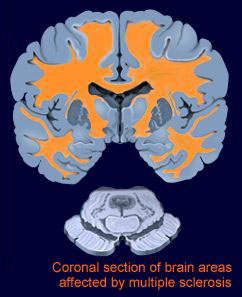 National MS Awareness Week runs from March 2nd to 8th.
 Â Researchers from the University of Las Vegas in Nevada
 In May 2008, researchers from the University of Wyoming in Laramie
 Â Dr. Eric Klein (photo) from the Cleveland Clinic Lerner College of Medicine, in Ohio has published a
 During the annual meeting of the American Academy of Neurology this April, researchers from Stanford University, in California will
 Â Researchers at Shahid Beheshti Medical Science University in Tehran, Iran
 Most publications are anecdotal case histories.
 A recent study casts doubt on the ability of ginkgo biloba to affect blood flow in the eye. This might be important for people with cataracts and glaucoma, but the findings are at odds with the prevailing point of view.
 Circumstantial evidence implicates the wintertime deficiency of vitamin D from too little sunlight, with an increase in colds and flu.
 In college students, meditation-based stress-management practices reduce stress and enhance forgiveness, according to this
 Researchers from the University of South Australia in Adelaide define the added benefits of a diet rich in omega-3 fatty acids to regular aerobic exercise.
 File this under the category, “how little we really know.”
 Higher dietary intake of folate was associated with a lower prevalence of depressive symptoms in Japanese men but not women,
 Pharmacy students