 Evidence suggests that behavioral counseling in sexually transmitted infections (STIs) clinics and primary care offices reduces STIs in “at-risk” adults and adolescents. Continue reading Behavioral counseling prevents sexually transmitted infections
Category Archives: C. MIND-BODY THERAPIES
Herbals for arthritis and other musculoskeletal conditions
 Ms. Meenakshi Khatta is a nurse practitioner and associate professor at the University of Maryland in Baltimore. Nurse Khatta has reviewed the use of CAM to treat pain due to musculoskeletal conditions.
Here are her findings on herbal supplements used to treat fibromyalgia, osteoarthritis, and rheumatoid arthritis. Continue reading Herbals for arthritis and other musculoskeletal conditions
The religion-medicine connection
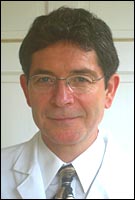 Dr. Harold Koenig (photo) is co-director of the Center for Spirituality, Theology, and Health at Duke University Medical Center, where he is also Professor of Psychiatry and Behavioral Sciences, and Associate Professor of Medicine.
In this lecture, Dr. Koenig makes a connection between religion/spirituality and mental and physical health. Continue reading The religion-medicine connection
Biofeedback to improve swallowing after stroke
 Â The effect of using surface electromyographic feedback to treat dysphagia in stroke patients was studied by researchers at the University of Amsterdam, in the Netherlands. Continue reading Biofeedback to improve swallowing after stroke
The aromatherapy primer
 Christian Nordqvist has published an introduction to aromatherapy on the Medical News Today website.
Here are the highpoints. Continue reading The aromatherapy primer
State-of-the-art: Behavioral treatment in ADHD
 Â Although more costly than drugs, behavioral treatments can improve functioning in many children with attention deficit/hyperactivity disorder (ADHD).
Dr. Desiree Murray from Duke University Medical Center in Durham, North Carolina compares different evidence-based behavioral treatments. Continue reading State-of-the-art: Behavioral treatment in ADHD
Massage for low back pain
 Â Massage might be beneficial for patients with subacute and chronic nonspecific low back pain, especially when combined with exercises and education, according to reviewers from Ontario and Brazil. Continue reading Massage for low back pain
Benefits of yoga in asthmatic children
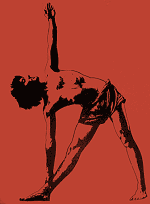 Researchers from the Chung Jen College of Nursing, in Taiwan report improved physical fitness of school-age children with asthma. Continue reading Benefits of yoga in asthmatic children
Biofeedback: Constipation and fecal incontinence
  Researchers from the University Hospital, in Tübingen, Germany, reviewed the evidence. Continue reading Biofeedback: Constipation and fecal incontinence
Music-therapy for spinal anesthesia
 Since pre-medication isn’t widely accepted in spinal anesthesia, researchers from Saitama Medical University, in Kawagoe, Japan studied the potential benefits of music therapy to control anxiety. Continue reading Music-therapy for spinal anesthesia
Influence of religion and spirituality on health
 Researchers at the University of Chicago report, “patients are likely to encounter quite different opinions about the relationship between their religion and spirituality (R/S) and their health, depending on the religious characteristics of their physicians.”
This conclusion is based on survey responses from 2000 practicing US physicians from all specialties. Continue reading Influence of religion and spirituality on health
Combining drugs + CBT to treat insomnia
 Â Cognitive behavioral therapy (CBT) and hypnotic medications are effective for short-term treatment of insomnia, but few patients achieve 100% relief with either alone.
Researchers from Canada studied the effects of combined therapy. Continue reading Combining drugs + CBT to treat insomnia
Heart effects of alternate nostril breathing
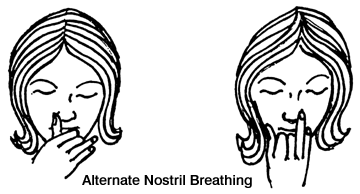 Researchers at Nepal Medical College in Kathmandu measured the physiological effects of Nadi Sodhana (alternate nostril breathing). Continue reading Heart effects of alternate nostril breathing
Does music improve sleep?
Researchers from the Institute of Behavioural Sciences in Budapest, Hungary tell us it depends on what you listen to. Continue reading Does music improve sleep?
CAM for Raynaud’s phenomenon?
 The value of conventional treatment is limited, and so is CAM.
Let’s review. Continue reading CAM for Raynaud’s phenomenon?
CAM options to treat pain at the end of life
 Of the many symptoms experienced by those at the end of life, pain is one of the most common, feared, and often undertreated,
Dr. Perry Fine from the University of Utah in Salt Lake City reviews the treatment options, including CAM. Here’s a summary. Continue reading CAM options to treat pain at the end of life
Biofeedback behavioral treatment for tinnitus
 Â Many tinnitus sufferers believe their condition will not respond to psychological treatments.
In December 2008, researchers from Philipps University of Marburg, in Germany reported a positive study. Continue reading Biofeedback behavioral treatment for tinnitus
Yoga in patients with COPD
 Â Researchers from the University of Ferrara, in Italy tell us yoga-derived breathing improves gas exchange in patients with chronic heart failure and in people exposed to high-altitude hypoxia.
Here’s what they found in patients with chronic obstructive pulmonary disease (COPD). Continue reading Yoga in patients with COPD
The effect of prayer on posttraumatic growth
Most discussions about the aftermath of trauma focus on the negative. However, some psychologists believe that although damaging, the experience of trauma can also inspire some people to change in positive ways — experience posttraumatic growth. Continue reading The effect of prayer on posttraumatic growth
Religion, self-regulation, and self-control
 Researchers from the University of Miami, in Florida reviewed of evidence that may help explain why religious people tend to live slightly longer lives; suffer less from depressive symptoms; avoid trouble with sex, drugs, and the police; do better in school; enjoy more stable and more satisfying marriages; and more regularly visit their dentists. Continue reading Religion, self-regulation, and self-control