In two studies here and here, a supplement called FertilityBlend increased the rate of pregnancy in women who had tried unsuccessfully to conceive for 6 to 36 months.
A recent study in The Lancet medical journal found that over the long term, it appears that taking folic acid improves cognitive function (eg, perception, memory, judgment, and reasoning) in older adults.
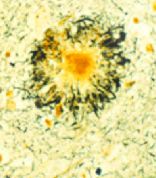
The journal Archives of Neurology just published a observational survey where it appears that “individuals who take in higher levels of the nutrient folate through both diet and supplements may have a reduced risk of developing Alzheimer’s disease.”
Reports about the association between the risk of breast cancer and folate intake or blood levels have been inconsistent.
Now, 3 heavy hitters from the Karolinska Institutet in Stockholm and the Harvard School of Public Health in Boston have reviewed the medical literature.
The Harvard Medical School Family Health Guidewarns, “The daily multivitamin pill is no substitute for a good diet. But none of us is perfect when it comes to healthful eating … The multivitamin is partial protection from our lapses.”
Their value is debated, but here’s the bottom line.
During a seminar at the American Heart Association 2006 meeting titled “The Science Behind Popular Nutrition Claims,” medical researchers summarized the research on a number of complementary options to “help maintain a healthy heart.”
Here is a summary of the Medscape article. Links to more info are highlighted.
High blood levels of the amino acid called homocysteine are thought to increase the risk for heart disease by damaging the lining of blood vessels and increasing blood clotting.
Despite this, the American Heart Association doesn’t recommend widespread use of folic acid to lower homocysteine blood levels.
The entry on breast cancer at Wikipedia asserts, “Folate intake counteracts breast cancer risk associated with alcohol consumption” This is based on research at the Mayo Clinic in 2001.
 The American Heart Association and the American Diabetes Association each published guidelines for cardiovascular disease prevention.
 In pre-menopausal women, total fiber intake protects against breast cancer.
 In two studies
 A recent
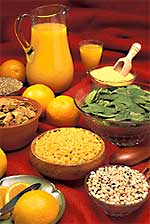 Functional Foods & Nutraceuticals has
 The Harvard Medical School Family Health Guide
 The entry on breast cancer at Wikipedia
 These data are from a telephone