 Let’s see, since June last year this blog has summarized 8 reports on the effects of coffee and caffeine and health.
What should we make of all this?
Let’s see, since June last year this blog has summarized 8 reports on the effects of coffee and caffeine and health.
What should we make of all this?
 Dr. Richard MacDermott is head of the division of gastroenterology at Albany Medical College in New York. He has specialized in inflammatory bowel disease (IBD) for 30 years and has an impressive resume.
Here are his dietary recommendations for people with IBS. My favorites are in italics.
Continue reading What to eat and not eat if you have inflammatory bowel disease
 Fatigue and impaired daytime functioning, confusion, altered timing of bowel movements, and sleep disturbance are all signs of jet lag. An article on Medscape lists options to manage jet lag.
The article covers many treatment options. CAM options are listed here.
 Yes, they do. But published evidence that they reduce weight is in short supply.
Here is a study of a thermogenic formulation and recent legal actions against weight lose products by the Federal Trade Commission (FTC).
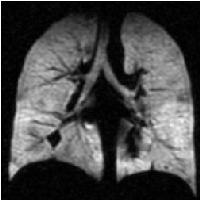 During the most recent meeting of the American College of Chest Physicians Dr. Paul Blanc from the University of California at San Francisco reported that half of all people with asthma use CAM.
Here are the highlights from Medscape.
The February issue of The Journal of Pain will publish an article about the response to caffeine in 9 women following exercise.
It’s being picked up by lots of news websites, but until the article appears, Medical News Today has the best review.
Continue reading Using caffeine to ease the pain after exercise
Functional Foods & Nutraceuticals has looked into the future and sees … new functional foods and nutraceuticals, of course.
Examples
Continue reading New calorie-burning and satiety foods for 2007
 These data are from a telephone survey of more than 2500 randomly sampled noninstitutionalized Americans, which was published in 2002. The tables can also be found here. Continue reading The most commonly used vitamins and herbals
 Drinking tea is associated with stress relief, and many people believe that it helps them relax after facing a stressful day. Now, we have scientific evidence for the relaxing properties of black tea.
Here are the details of the study.
Continue reading Yes, black tea helps relieve stress
An article in Yoga Journal states, “Some yogis eschew the use of all caffeine, while others adopt a policy of moderate consumption. Caffeine can temporarily enliven the body, but dependence on it could hinder your yoga practice.”
For those who want to stop using caffeine-containing products, the article recommends adding Yogi tea or specific medicinal herbs to your diet to help ease the transition.
I have no idea if any of this stuff helps. It is clear however, that caffeine withdrawal is well documented and is included in DSM-IV-TR (the 4th text revision of Diagnostic and Statistical Manual of Mental Disorders), considered the bible of mental disorders.
Here are details of the caffeine withdrawal symptoms.
 Several herbal remedies and other dietary supplements are promoted as effective treatments for Alzheimer’s disease and related disorders. The Alzheimer’s Association summarizes the supporting data for the following treatments.
A review of ginkgo biloba is also available here.
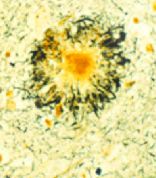
Illustration: Neurofibrillary tangles and fiberlike processes of neurons (black) surround an amyloid plaque. Source: Chemical and Engineering News
7/8/06 15:50 JR