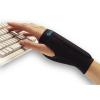
 Aside from surgery, splinting, exercises, and other alternative therapies have been used.
Researchers at Oregon Health & Science University reviewed the evidence. Continue reading Review: CAM options for carpel tunnel syndrome
Aside from surgery, splinting, exercises, and other alternative therapies have been used.
Researchers at Oregon Health & Science University reviewed the evidence. Continue reading Review: CAM options for carpel tunnel syndrome
 Not a lightweight, Dr. Alex Hutchinson’s doctoral degree in physics is from the University of Cambridge.
Now, he corrects what we thought we knew about exercise. Continue reading Debunking exercise myths
 Researchers at the University of British Columbia Okanagan, reviewed the evidence to determine whether physical fitness and function benefits are achieved through the practice of yoga. Continue reading Does yoga improve fitness in older adults?
The presence of the APOE epislon4 gene is a genetic risk factor for Alzheimer’s disease.
Researchers at Washington University in St. Louis, Missouri, examined whether physical exercise alters the association between APOE gene and amyloid deposition in normal adults. Continue reading Lowering dementia risk in selected people
 Chronic constipation is common among the elderly and women. Doctors prescribe various treatments, and patients often use over-the-counter remedies.
Researchers at Queen’s University, in Kingston, Ontario, reviewed the evidence and provide perspective. Continue reading CAM options to treat chronic constipation
 Postural orthostatic tachycardia syndrome (aka POTS, postural tachycardia syndrome) occurs when an abnormal increase in heart rate accompanies going from lying down to an upright position.
Researchers in the US evaluated exercise training vs beta-blockadewithpropranolol (Inderal) treatment in POTS patients. Continue reading Exercise vs propranolol for postural orthostatic tachycardia syndrome
 Small studies suggest that yoga might have benefits.
Researchers at Group Health Research Institute, in Seattle, Washington, studied whether yoga is more effective than conventional stretching exercises or a self-care book for primary care patients with chronic low back pain. Continue reading Yoga vs stretching for low back pain
 Metabolic syndrome is the name for a group of risk factors that occur together and increase the risk for coronary artery disease, stroke, and type 2 diabetes.
During the Endocrine Society meeting, researchers from Weill Cornell Medical College in New York City presented the results of a comparison of aerobic training (eg, walking) vs resistance training (eg, weights). Continue reading Walking vs weights for the metabolic syndrome
Researchers at the University of Sydney, in Australia studied whether there was a relationship between slow walking speed and increased risk of death. Continue reading Are you walking faster than the grim reaper?
Researchers across the US combined their efforts to define the relationship between fitness and body mass index (BMI) with mortality. Continue reading The ultimate benefit of fitness
 Breathlessness (aka dyspnea) is difficult to manage in palliative care.
Researchers in the UK reviewed and ranked the most effective nonpharmacological strategies. Continue reading Nonpharmacological strategies for breathlessness
 Researchers at the University of Manchester, in the UK, studied the clinical impact of telephone-delivered cognitive behavioral therapy (CBT) and exercise alone vs both for patients with chronic widespread pain. Continue reading Telephone-delivered CBT and exercise to treat chronic widespread pain
 If you exercise enough, is it possible to selectively lose abdominal fat?
No, say researchers at Wake Forest University in Winston-Salem, North Carolina and the State University of New York at Buffalo. Continue reading CAM Archive: Effect of exercise intensity and belly fat
The National Cancer Institute has summarized the effects. Continue reading Physical activity and the risk of cancer
 Researchers at Catholic University Leuven, in Belgium, reviewed the evidence for physical therapy in people with schizophrenia.
First, the details.
10 studies were included in the review.
And, the results.
The bottom line?
The authors concluded, “Physical therapy offers added value in the multidisciplinary care of people with schizophrenia.”
The differences between studies in terms of design and the small number of patients studies, say the researchers, make it necessary to conduct additional studies to confirm these findings.
11/6/11 18:48 JR
Chronic low back pain is a common problem lacking effective treatment options.
Researchers in Oregon and Washington compared yoga and conventional stretching exercises for patients with chronic low back pain. Continue reading Yoga vs stretching for low back pain
 Researchers at the University of Gothenburg, in Sweden, compared the effects of exercise and topiramate (Topamax) in migraine prevention. Continue reading Exercise to prevent migraine
 Intermittent claudication is a diagnosis for muscle pain (ache, cramp, numbness, or sense of fatigue) typically in the calf muscle, which occurs during exercise and is relieved by a short period of rest.
Researchers at Oklahoma University Health Sciences Center, in Oklahoma City, compared home-based exercise to a supervised exercise program. Continue reading Supervised vs home exercise to treat intermittent claudication
 Researchers at Ho Miu Ling Nethersole Hospital, in Hong Kong, China, studied patients with end-stage kidney disease — complete, or almost complete failure of the kidneys to function.
The hardest part is maintaining commitment. Continue reading Benefits of tai chi in patients with kidney disease
 Researchers in California and Utah studied patients as they performed 8 weeks of knee-extensor exercise. Continue reading How does exercise benefit heart failure patients?