A single session of repetitive transcranial magnetic stimulation (rTMS) to the unaffected part of the brain can improve motor function in stroke patients.
Johrei (pronounced Jo-ray) is a non-touch healing method similar to reiki. It involves channeling of “universal healing energy” to influence the health of another person. Three studies in the past 15 months have attempted to correlate subjective changes with other objective outcomes.
“We believe [the ionized bracelet] affects the body’s bio-electric balance of positive and negative ions (Yin and Yang), so as to achieve Chi.”
That’s the claim. In addition the bracelets “optimize your bio-energy, to promotion [sic] better performance and an overall sense of health and well-being.”
It’s hard to believe anyone would take such claims seriously. But they do.
The Mayo Clinic tested the bracelets in more than 600 adults. Here are the results.
In the Polarity model, “health is experienced when energy systems function in their natural state,” according to the “American Polarity Therapy Association (APTA).
Sounds good. And in a study of 15 women undergoing radiation therapy for breast cancer there was a statistically significant improvement in cancer-related fatigue and health-related quality of life.
Repetitive transcranial magnetic stimulation (rTMS) as treatment for depression shows statistically significant effects. However, the clinical significance of these effects has been questioned.
The results from two studies of transcranial magnetic stimulation (TMS) may lead to a better method of predicting or assessing the effects of drugs used to treat neuropathic pain.
In TMS, a magnetic coil is moved over the brain. The resulting magnetic fields induce tiny electrical currents in the skull that alter the activity of nerve pathways, leading (in these studies) to stimulation of different areas.
In the first study, the antiseizure drugs carbamazepine (Carbatrol), gabapentin (Neurontin) and topiramate (Topamax) administered to 8 patients with neuropathic pain reduced the TMS excitability of certain nerves in the brain.
In the second study, the extent of the suppresion of the nerves was greater in 23 patients with neuropathic pain as the dose of topiramate increased.
There’s lots of interest in using transcranial magnetic stimulation (TMS) to assess the underlying causes of neurologic diseases ? as well as diagnose and possibly treat these conditions.
The intent in this study was not to use magnets (or more precisely magnetic fields) as a form of therapy. In this case, TMS was used to detect differences in nerve function in normal volunteers and patients with Alzheimer’s disease.
Repetitive TMS can regulate the excitability of the cerebral cortex of the brain. The researchers found that healthy people respond to repeated magnetic stimulation with an electrical response from the nerves that progressively increases in size.
In patients with Alzheimer’s disease, this is not the case. In fact, the electrical response decreases in size.
Most of the benefits reported with Reiki are based on the personal experiences of those who receive treatment and those who administer it.
Several years ago I met Michael W. Smith, a Reiki (pronounced “ray-key”) master in practice at the Women’s Place at Carroll County General Hospital in Westminster, Maryland. I interviewed him and later wrote two articles.
The first was an edited transcript of our conversation covering the basics of Reiki.
The essential Reiki
Reiki levels and attunement
A Reiki treatment session
The appropriate role for Reiki treatment today
The second article describes the effect of reiki on a woman with Alzheimer’s disease. It also compares Reiki to touch therapy and massage.
Taken together, they are, if I say so myself, a good way to begin to understand this form of complementary therapy.
8/11/06 00:25 JR
Complementary and Alternative Medicine: Fair, Balanced, and to the Point
 I love the studies on repetitive transcranial magnetic stimulation (rTMS). It’s magnet therapy for the 21st century — sort of.
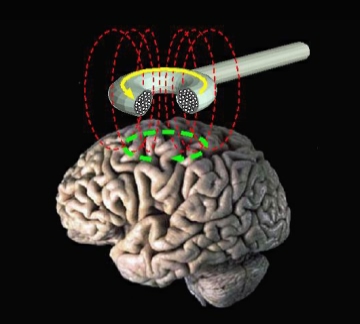 A single session of repetitive transcranial magnetic stimulation (rTMS) to the unaffected part of the brain can improve motor function in stroke patients.
 Johrei (pronounced Jo-ray) is a non-touch healing
 “We believe [the ionized bracelet] affects the body’s bio-electric balance of positive and negative ions (Yin and Yang), so as to achieve Chi.”
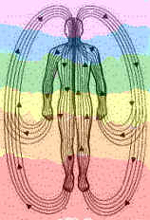 In the Polarity model, “health is experienced when energy systems function in their natural state,”
 Most of the benefits reported with Reiki are based on the personal experiences of those who receive treatment and those who administer it.