“More than half of women who treat their symptoms of menopause take soy supplements or herbal products as part or all of their therapy.” states The New York Times, which reported on a recently published article in the journal Menopause.
However, the women in this online survey generally felt illinformed about proper doses and use of herbal products.
The Centers for Disease Control has just published the latest data on the prevalence of diabetes in the US.
11% of adults aged 40 to 59 years
23% of those 60 and older have diabetes
Is it any wonder that so many CAM therapies are studied in people with diabetes?
A quick listing of CAM entries for diabetes on this blog is provided below. Or, click the button on the right sidebar to see all of the diabetes entries.
Omega-3 fatty acids benefit the heart of healthy people, and those who are at high risk of heart disease or already have it. And I suppose when it becomes a prescription drug, it’s no longer complementary but integrated into mainstream medicine.
After eating a meal, blood sugar levels increase and then peak before coming down, as shown on the graph above. This blood sugar “excursion” is exaggerated in people with diabetes compared to those who are not diabetic.
A previous post reported the American Heart Association’s (AHA) position that soy as a dietary factor has unproven or uncertain effects on cardiovascular disease.
Now, a review of 42 well-designed clinical trials from 1982 through 2004 reports the following positive effects about soy.
Nattokinase is promoted as a safe anticlotting agent. An email I received this morning described it as perhaps “among the most powerful of all methods to improve your heart health.” The source of nattokinase is natto, a vegetable cheese-like food made from fermented soybeans.
The story is similar to other “miracle” treatments from the orient ? except for the part about the horses. The Japanese have eaten natto for a thousand years. They have a lower prevalence of heart disease. And western drugs are poison.
Oops, I almost forgot. “Ancient Samurai … fed it to their horses to increase their speed and strength.”
Probiotics reduce cholesterol absorption and increase cholesterol excretion. But it’s unclear if the effect has significance for patients with hypercholesterolemia.
My anecdotal experience is that soy gives me a headache. Not from eating it, but from reading about it!
Too much about soy sources, the fermentation processes, and oh those isoflavones. Way too much bloviating here, here, and here about the pros and cons of soy.
Sometimes you just have to cut through the fog and ask, What’s the bottom line on soy?
Thanks to a Washington state food market chain, here it is.
Three of 16 products failed the content analysis test. One product did not release its ingredients and two others had less than half the expected ingredients.
That’s less than a 20% failure rate, which is better than often reported by this lab.
Several herbal remedies and other dietary supplements are promoted as effective treatments for Alzheimer’s disease and related disorders. The Alzheimer’s Association summarizes the supporting data for the following treatments.
 “More than half of women who treat their symptoms of menopause take soy supplements or herbal products as part or all of their therapy.” states The New York Times, which reported on a recently published article in the journal Menopause.
 The Centers for Disease Control has just published the latest
 Omega-3 fatty acids benefit the heart of healthy people, and those who are at high risk of heart disease or already have it. And I suppose when it becomes a prescription drug, it’s no longer complementary but integrated into mainstream medicine.
 After eating a meal, blood sugar levels increase and then peak before coming down, as shown on the graph above. This blood sugar “excursion” is exaggerated in people with diabetes compared to those who are not diabetic.
 Nattokinase is promoted as a safe anticlotting agent. An email I received this morning described it as perhaps “among the most powerful of all methods to improve your heart health.” The source of nattokinase is natto, a vegetable cheese-like food made from fermented soybeans.
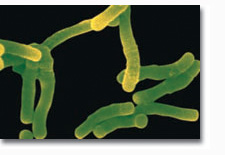 Probiotics
 My anecdotal experience is that soy gives me a headache. Not from eating it, but from reading about it!
 Three of 16 products
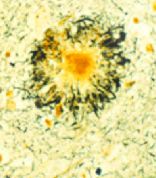 Several herbal remedies and other dietary supplements are promoted as effective treatments for Alzheimer’s disease and related disorders. The Alzheimer’s Association