 Dr. Mary Tinetti of Yale University School of Medicine in New Haven, Connecticut tells us “Falls are one of the most common health problems experienced by older adults and are a common cause of losing functional independence.” The American Geriatrics Society (AGS) recommends that healthcare professionals use their guidelines as a routine part of healthcare for the elderly. Continue reading Reducing the risks of falls in the elderly
Category Archives: Elderly
Risk of cognitive decline in the elderly following surgery
 It’s generally assumed that older adults may experience memory loss and other problems in cognition (reasoning) following surgery.
Results from a study at Washington University, in St. Louis, Missouri suggest otherwise. Continue reading Risk of cognitive decline in the elderly following surgery
More support for omega-3 to slow age-related cognitive decline
 Researchers at Martek Biosciences Corporation, in Columbia, Maryland, studied the effects of docosahexaenoic acid (DHA) (an essential fatty acid) on improving cognitive functions in healthy older adults with age-related cognitive decline. Continue reading More support for omega-3 to slow age-related cognitive decline
Tai chi effects in women with osteoarthritis
 The effects of tai chi on knee muscle strength, bone mineral density, and fear of falling were studied by researchers at Chungnam National University, in Daejeon, South Korea. Continue reading Tai chi effects in women with osteoarthritis
Cost-effectiveness: Falls prevention in high-risk elderly
Falls prevention programs reduce the risk in older people. But are they cost-effective?
Researchers in the UK evaluated the fiscal benefits. Continue reading Cost-effectiveness: Falls prevention in high-risk elderly
Review: Otago exercise program to reduce falls in the elderly
Approximately 35% of people over 65 fall each year, with this figure rising to 50% in those aged 80 and over.
Researchers at the University of South Australia, in Adelaide, reviewed the value of this strength and balance retraining program to reduce the risk of death and falls. Continue reading Review: Otago exercise program to reduce falls in the elderly
Beneficial health effects of care giving
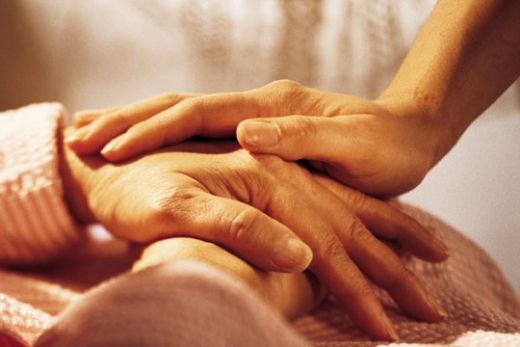 Medical News Today reports on this study in the journal, Psychological Science.
Apparently, “older people who spent at least 14 hours a week taking care of a disabled spouse lived longer than others” who spent less time or no time, according to researchers at the University of Michigan. Continue reading Beneficial health effects of care giving
Does vitamin D reduce the risk of falls in older adults?
Researchers at Johns Hopkins University School of Medicine, in Baltimore, Maryland reviewed the evidence. Continue reading Does vitamin D reduce the risk of falls in older adults?
September 23rd is Falls Prevention Awareness Day
The American Physical Therapy Association is urging older adults to take a moment to complete a room-by-room checklist to identify and repair possible fall hazards in their homes and begin an exercise plan to reduce chances of falling and risk of injury.
Let’s focus on the risks and consequences of falls among the elderly. Continue reading September 23rd is Falls Prevention Awareness Day
Benefits of balance and tone exercise in older women
 Researchers at the University of British Columbia, in Vancouver, Canada studied the effects on cognitive function. Continue reading Benefits of balance and tone exercise in older women
Changes in memory afer drinking blueberry juice
 Blueberries contain anthocyanins, which have antioxidant and anti-inflammatory effects.
Researchers at Tufts University, in Boston studied the effects of drinking wild blueberry juice in older adults with early memory changes. Continue reading Changes in memory afer drinking blueberry juice
Is napping “bad” for nighttime sleep?
 Two published studies conclude it is not. Continue reading Is napping “bad” for nighttime sleep?
Vitamin D and the risk of dementia
No prospective study has examined the association between vitamin D and cognitive decline or dementia,… until now.
Researchers in the US, UK, and Italy studied whether low blood levels of 25-hydroxyvitamin D (25[OH]D) are associated with an increased risk of substantial cognitive decline. Continue reading Vitamin D and the risk of dementia
Weight bearing yoga in postmenopausal women
 Researchers from Chulalongkorn University, in Bangkok, Thailand studied changes in bone resorption and the quality of life of the postmenopausal women. Continue reading Weight bearing yoga in postmenopausal women
Importance of vitamin D screening and supplementation in diabetes
 During the Endocrine Society’s Annual Meeting, Researchers from Johns Hopkins University School of Medicine and Sinai Hospital, in Baltimore, Maryland, reported an association between vitamin D deficiency and type 2 diabetes. Continue reading Importance of vitamin D screening and supplementation in diabetes
Review: Tai chi and fear of falling
Tai chi is becoming increasingly popular as an option to prevent falls.
Researchers at the University Medical Centre Rotterdam, in The Netherlands, reviewed the evidence. Continue reading Review: Tai chi and fear of falling
Dancing to improve quality of life in old people
 Researchers at Aristotle University, in Thessaloniki, Greece, studied the effect of Greek traditional dances on quality of life. Continue reading Dancing to improve quality of life in old people
Does Ginkgo reduce cardiovascular events?
 Cardiovascular events, of course, include heart attack, stroke or death due to diseased heart and blood vessels.
Researchers from the US looked for evidence of benefit from Ginkgo biloba. Continue reading Does Ginkgo reduce cardiovascular events?
Practical tips for selecting canes and walkers
 Mayo Clinic Women’s HealthSource has published a review.
You’ll need a subscription to read the entire article, but here’s a summary, courtesy of Medical News Today. Continue reading Practical tips for selecting canes and walkers
Might massage reduce the use of sedative-hypnotic drugs at bedtime?
 Researchers from Temple University in Philadelphia, Pennsylvania tell us, “Despite known adverse effects, sedative-hypnotic drugs are widely used in institutional settings serving the elderly.”
They studied the potential of massage at bedtime to reduce their use. Continue reading Might massage reduce the use of sedative-hypnotic drugs at bedtime?