In a previous post I reviewed policosanol, which can lower LDL (bad) cholesterol levels by 20% to 30%.
The source of policosanol seems to influence its activity, with Cuban sugar cane-based policosanol being most effective. It’s available on the Internet and in stores. In fact, One-A-Day Cholesterol Plus contains sugar cane-based policosanol.
Now, a study conducted at the University of Kentucky College of Pharmacy shows how it works.
There is no well-established dose of coenzyme Q10. One review listed a range of doses from 75 mg to 360 mg per day to treat high blood pressure. And the suggested doses for other conditions fall within this range.
In Japan, the medicinal dosage of CoQ10 is 30 mg/day, but it’s more commonly taken as a dietary supplement at 100 mg to 200 mg daily.
For the past year Japan’s Ministry of Health, Labour and Welfare has worked to get control of this situation. In the absence of sufficient dosing data, the following actions are likely to be implemented.
Require manufacturers and distributors to confirm the safety of the dose in long-term use
Provide consumers with relevant warnings or cautions
My anecdotal experience is that soy gives me a headache. Not from eating it, but from reading about it!
Too much about soy sources, the fermentation processes, and oh those isoflavones. Way too much bloviating here, here, and here about the pros and cons of soy.
Sometimes you just have to cut through the fog and ask, What’s the bottom line on soy?
Thanks to a Washington state food market chain, here it is.
Three of 16 products failed the content analysis test. One product did not release its ingredients and two others had less than half the expected ingredients.
That’s less than a 20% failure rate, which is better than often reported by this lab.
In 2004, a study in patients with chronic stable congestive heart failure (CHF) showed that supplementation with l-arginine taken by mouth prolongs exercise duration. It was thought this might be due to nitric oxide-induced dilation of blood vessels in peripheral areas of the body.
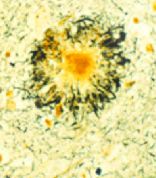
Several herbal remedies and other dietary supplements are promoted as effective treatments for Alzheimer’s disease and related disorders. The Alzheimer’s Association summarizes the supporting data for the following treatments.
 In a previous post I reviewed policosanol, which can lower LDL (bad) cholesterol levels by 20% to 30%.
 There is no well-established dose of coenzyme Q10. One review listed a range of doses from 75 mg to 360 mg per day to treat high blood pressure. And the suggested doses for other conditions fall within this range.
 My anecdotal experience is that soy gives me a headache. Not from eating it, but from reading about it!
 Three of 16 products
 In 2004, a
 Several herbal remedies and other dietary supplements are promoted as effective treatments for Alzheimer’s disease and related disorders. The Alzheimer’s Association