 There’s evidence that blood levels of coenzyme Q10 decrease in people with advanced chronic heart failure.
Now we know that CoQ10 supplements help and exercise helps more.
Continue reading Coenzyme Q supplements benefit patients with heart failure
There’s evidence that blood levels of coenzyme Q10 decrease in people with advanced chronic heart failure.
Now we know that CoQ10 supplements help and exercise helps more.
Continue reading Coenzyme Q supplements benefit patients with heart failure
 It’s always a good idea to get a second opinion when it comes to your healthcare. Coenzyme Q10 (CoQ10) has been used, recommended, or studied for many conditions, but its use is controversial. Here are two websites that reviewed the literature and are ready to advise on the status of CoQ10 — MotherNature.com (MN) and MayoClinic.com (MC).
Here are comparative evaluations and ratings for three sample diseases.
During a seminar at the American Heart Association 2006 meeting titled “The Science Behind Popular Nutrition Claims,” medical researchers summarized the research on a number of complementary options to “help maintain a healthy heart.”
Here is a summary of the Medscape article. Links to more info are highlighted.
Continue reading CAM for heart disease: Current state of the evidence
 The good news is that all 36 products tested had the claimed ingredients. But the doses varied from 15 mg to 400 mg!
This isn’t surprising and has been discussed here before. Perspective on the value of CoQ10 to treat high blood pressure, angina, and Alzheimer’s disease is provided in this earlier post.
10/16/06 22:35 JR
 In a previous post I reviewed policosanol, which can lower LDL (bad) cholesterol levels by 20% to 30%.
The source of policosanol seems to influence its activity, with Cuban sugar cane-based policosanol being most effective. It’s available on the Internet and in stores. In fact, One-A-Day Cholesterol Plus contains sugar cane-based policosanol.
Now, a study conducted at the University of Kentucky College of Pharmacy shows how it works.
Continue reading How policosanol lowers cholesterol and implications for your safety
There is no well-established dose of coenzyme Q10. One review listed a range of doses from 75 mg to 360 mg per day to treat high blood pressure. And the suggested doses for other conditions fall within this range.
In Japan, the medicinal dosage of CoQ10 is 30 mg/day, but it’s more commonly taken as a dietary supplement at 100 mg to 200 mg daily.
For the past year Japan’s Ministry of Health, Labour and Welfare has worked to get control of this situation. In the absence of sufficient dosing data, the following actions are likely to be implemented.
Good work.
8/22/06 18:59 JR
 Several herbal remedies and other dietary supplements are promoted as effective treatments for Alzheimer’s disease and related disorders. The Alzheimer’s Association summarizes the supporting data for the following treatments.
A review of ginkgo biloba is also available here.
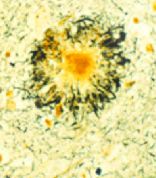
Illustration: Neurofibrillary tangles and fiberlike processes of neurons (black) surround an amyloid plaque. Source: Chemical and Engineering News
7/8/06 15:50 JR