 Researchers from the University of Milano, Italy, list what we know. Continue reading Functional foods and cardiovascular risk
Category Archives: Tea
CAM for type 2 diabetes
 Researchers from the University of Ottawa, in Ontario focused their review on type 2 (AKA adult onset) diabetes.
Here’s a summary of the evidence for CAM therapies. Continue reading CAM for type 2 diabetes
Negative effects of herbals on asthma control
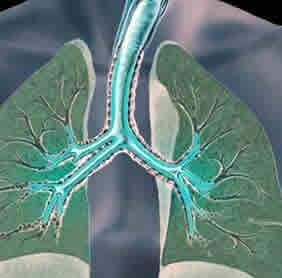 Researchers from Mount Sinai School of Medicine, in New York City examined the association among the use of herbals and patients’ adherence to prescribed inhaled steroids, and drug treatment and disease beliefs. Continue reading Negative effects of herbals on asthma control
Initial study of Zyflamend for prostate cancer
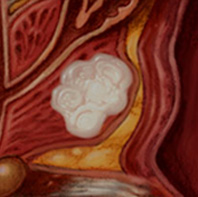 Laboratory research suggests that Zyflamend — an extract containing 10 herbs — decreases prostate cancer growth.
Now, researchers from the Center for Holistic Urology at Columbia University Medical Center and New York-Presbyterian Hospital/Columbia are starting a systematic evaluation in patients. Continue reading Initial study of Zyflamend for prostate cancer
Coffee, tea, and the risk of diabetes
 Researchers from The University of Sydney, in Australia report the findings of meta-analyses of coffee, decaffeinated coffee, and tea consumption on the risk of diabetes. Continue reading Coffee, tea, and the risk of diabetes
Green tea and the risk of depression
 Researchers from Japan studied the relationship between drinking green tea and depression in elderly Japanese adults. Continue reading Green tea and the risk of depression
Treating precancerous lesions with green tea
Patients at high-risk for cancer of the mouth based on the appearance of leukoplakia — white plaque that doesn’t rub off and can’t be clinically identified as another entity — were studied by researchers in Texas and Japan. Continue reading Treating precancerous lesions with green tea
Lower psychological distress by drinking green tea
 Researchers from Tohoku University, in Sendai, Japan report the results of the Ohsaki Cohort 2006 Study. Continue reading Lower psychological distress by drinking green tea
Green tea and the risk of cancer in Japan
 Researchers in Japan report that drinking more green tea lowers the risk of hematologic malignancies — cancers that affect blood, bone marrow, and lymph nodes. Continue reading Green tea and the risk of cancer in Japan
Effects of green tea on weight loss
 Â Researchers from the Maastricht University, in The Netherlands reviewed the evidence.
 Researchers from the Maastricht University, in The Netherlands reviewed the evidence.
But, there are limits over what can be claimed by manufacturers. Continue reading Effects of green tea on weight loss
Does green tea prevent cancer?
 Based on studies of more than a million people, Prof. Ernst and colleagues concluded, “Drinking green tea remains unproven in cancer prevention.” Continue reading Does green tea prevent cancer?
May is stroke month
 Â So, here’s a list of studies on CAM and stroke that were published in the past year. Continue reading May is stroke month
 So, here’s a list of studies on CAM and stroke that were published in the past year. Continue reading May is stroke month
How might black tea protect against heart disease?
 Â Researchers from the University of L’Aquila, in Italy report it improves blood vessel reactivity, while reducing stiffness. Continue reading How might black tea protect against heart disease?
 Researchers from the University of L’Aquila, in Italy report it improves blood vessel reactivity, while reducing stiffness. Continue reading How might black tea protect against heart disease?
Review: Drinking tea and the risk of stroke
 Drinking at least 3 cups of black or green tea was associated with a 21% lower risk of stroke compared to consuming less than a cup a day, report researchers at the University of California, Los Angeles.
The results were presented during the American Stroke Association International Stroke Conference. Continue reading Review: Drinking tea and the risk of stroke
Does drinking green tea reduce breast cancer risk?
 Researchers from Vanderbilt School of Medicine Nashville, Tennessee and the Shanghai Center for Disease Prevention and Control in the People’s Republic of China report a weak association. Continue reading Does drinking green tea reduce breast cancer risk?
Most commonly used natural products
 Here’s a follow-up to an earlier post on the use of CAM in the US in 2007 as surveyed by the National Center for Complementary and Alternative Medicine (NCCAM). Continue reading Most commonly used natural products
How to brew green tea for the best antioxidant effect
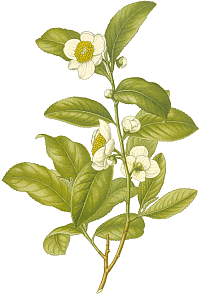 The difference between green, black, and oolong tea is in the processing. Green tea is made from unfermented leaves and contains the highest concentration of polyphenols, such as cathecin. Polyphenols are powerful antioxidants. They neutralize free radicals in the body that contribute to the aging process, as well as the development of cancer and heart disease.
Now, a study has looked at the process of brewing green tea to get the best antioxidant effect.
Continue reading How to brew green tea for the best antioxidant effect
Hibiscus tea lowers blood pressure
Researchers from Tufts University in Boston reported during the American Heart Association 2008 Scientific Sessions in New Orleans that drinking 3 cups of hibiscus tea daily for 6 weeks lowered systolic blood pressure (SBP) by about 7 mmHg in prehypertensive and mildly hypertensive subjects. Continue reading Hibiscus tea lowers blood pressure
CAM and diabetes: An update of recent studies
The World Health Organization has predicted a 39% rise in the worldwide prevalence of diabetes by 2030. And an article in The Lancet indicates this might be an underestimation.
Since November is Diabetes Month, here’s a round-up of CAM options for people with diabetes from 2006 through March 2007.
Continue reading CAM and diabetes: An update of recent studies
Green tea and cancer prevention?
Green tea is made from the dried leaves of Camellia sinensis.
Here’s what we know about its use to prevent cancer. Continue reading Green tea and cancer prevention?