The C.A.M. Report
Complementary and Alternative Medicine: Fair, Balanced, and to the Point
  • About this web log

    This blog is intended as an objective and dispassionate source of information on the latest CAM research. Since my background is in pharmacy and allopathic medicine, I view all CAM as advancing through the development pipeline to eventually become integrated into mainstream medical practice. Some will succeed while others fail. But all are treated fairly here.

  • About the author

    John Russo, Jr., PharmD, is president of The MedCom Resource, Inc. Previously, he was senior vice president of medical communications at www.Vicus.com, a complementary and alternative medicine website.

  • Top topics on The CAM Report

    * Animal-assisted Therapy * Birth Defects * Blog archive: Comparing mindfulness and cognitive behavioral therapy * Multiple Sclerosis * Anemia
  • Recent Posts

  • Recent Comments

    • Common sense considerations

      The material on this weblog is for informational purposes. It is not medical advice or counsel. Be smart, consult your health professional before using CAM.

    • Support this site

      If you found the information here helpful, please consider supporting this site.If you found the information here helpful, please consider supporting this site.

    Lumbar stabilizing exercises for recurrent low back pain?
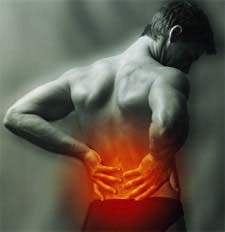
     Does a graded exercise program of lumbar stabilizing exercises reduce pain and disability, compared to a walking program, for patients with recurrent low back pain?

    First, the details.

    • 71 patients with recurrent mechanical low back pain (at least 8 weeks duration, with at least 1 pain-free period during the past year) and without leg pain were randomly assigned to a treatment group for 8 weeks.
    • The exercise program was individually supervised by a physiotherapist weekly for 45 minutes.
      • Walking program: Walk 30 minutes daily at the fastest pace that did not aggravate pain.
      • Stabilizing exercises for the lumbar spine: Re-learning activation of the transversus abdominis and multifidus muscles, with assistance of a pressure biofeedback cuff.
    • Exercises progressed according to clinical judgment, pain levels, and movement control and quality.

    And, the results.

    • At 12 months 86% of patients were followed-up.
    • There was no clinically-important difference between the groups with respect to change in pain or disability.

    The bottom line?
    The author concluded, “Lumbar stabilizing exercises appear to have a similar effect on pain and disability for patients with recurrent low back pain as a daily walking program.”

    6/18/09 20:10 JR

    Leave a Comment

    You must be logged in to post a comment.

    Register Login