 For years, US inspection records show, China has flooded the United States with foods unfit for human consumption.
Here’s the latest from The Washington Post. Continue reading More problems with tainted Chinese imports
For years, US inspection records show, China has flooded the United States with foods unfit for human consumption.
Here’s the latest from The Washington Post. Continue reading More problems with tainted Chinese imports
The Cochrane Collaboration review of 7 studies suggests the following.
Continue reading Chinese herbal medicine plus antipsychotic medication to treat schizophrenia
 A 10-minute segment on attention deficit hyperactivity disorder (ADHD) will appear in late May on the PBS program, To The Contrary. Continue reading Transcendental Meditation and ADHD
 I received some emails promoting Nature Made CholestOff. It contains plant extracts called phytonutrients, specifically phytosterols and phytostanols. They work by reducing the absorption of LDL “bad” cholesterol and total cholesterol from the intestines.
The ad emphasizes a 24% reduction in LDL cholesterol when combined with diet and exercise. However… Continue reading CholestOff reduces cholesterol, but not as much as advertised
 The Guardian reports and Clayton Cramer’s blog has summarized the research on a potential link between an omega-3 fatty acid deficiency and increased violence.
Here’s the evidence so far.
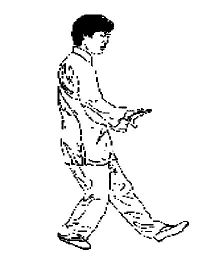 Qigong (pronounced chee-kung) is an energy practice or low-impact exercise program that generally encompassing simple movements and postures. Some qigong systems also emphasize breathing techniques.
Here’s a summary of three qigong studies in patients published last year.
 Scientists at Germany’s Federal Research Centre for Nutrition and Food compared wheat grown organically to wheat farmed conventionally with chemical fertilizers.
Here’s a summary of a report in the Toronto Sun based on an article published in the journal Agricultural & Food Chemistry.
Continue reading Nutritional comparison of organic and conventionally grown wheat
 Here is an update to the Cochrane Review of echinacea summarized here in July.
Their consensus was that taking echinacea after the onset might shorten the cold, but does not prevent the onset of the common cold. Even at this, the experts were skeptical.
Now another analysis of clinical trials has come to a different conclusion.
Continue reading Positive news for echinacea and the common cold
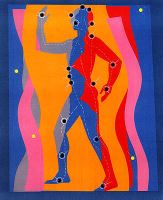 About 2 years ago, there was news that acupuncture lowered blood pressure in rats. I usually avoid reporting animal studies. It’s along way from the lab to the clinic.
Here’s a case in point.
Continue reading Acupuncture not effective in lowering blood pressure
 An article in the Archives of Internal Medicine reports that patients who see general practitioners and receive a “low intensity of care” recover from their injuries more quickly compared with those who see general practitioners for more intensive care.
In other words, the more intensive care provided by a more specialized healthcare provider results in the slowest recover.
Hmm.
 First question. What are avocado/soybean unsaponifiables (ASU)? Continue reading The role of avocado/soybean unsaponifiables to treat osteoarthritis
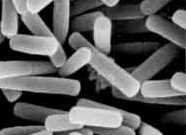 Necrotizing enterocolitis is a serious intestinal disorder. It affects 7% to 15% of very low-birth-weight (less than 1500-gram; 3.3 pound) infants. Death occurs in about 12 per 100,000 affected babies.
A review published in The Lancet concludes, “Probiotics might reduce the risk.” Although important questions remain. Continue reading Probiotics effective in infants with enterocolitis
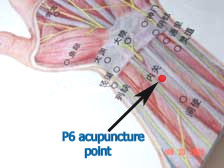 This study used Pericardium 6 (Neiguan) acupoint (photo) to reduce chemotherapy-induced nausea and vomiting.
It raises as many questions as it attempts to answer.
Continue reading P6 acupressure for nausea and vomiting in breast cancer patients
 May is skin cancer awareness month. Dr. Stephan Lautenschlager from Triemli Hospital in Switzerland has reviewed the evidence and thinks we should stop trusting sunscreen as the front line of defense against harmful rays.
He and Dr. Susan Chon, from the MD Anderson Cancer Center writing in another article, have recommendations that are summarized here. Continue reading Sunscreen: Criticism and counsel
 Researchers from the Medical University of Vienna reviewed and reanalyzed the results from 25 studies of the treatment of the climacteric syndrome (menopause).
Their findings are not always clear-cut. Continue reading The value of phytoestrogens during menopause
 For infants who must be feed using nutrition injected directly into a large blood vessel, the development of liver disease is a life-threatening long-term complication.
The condition is called parenteral nutrition associated liver disease (PNALD), and a study presented during the annual meeting of the Pediatric Academic Societies reports that injecting fish-oil based omega-3 lipids is safe and effective treatment. Continue reading Preventing liver disease in infants getting parenteral nutrition
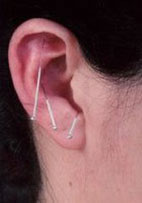 I originally emphasized the substance (smoking) use aspect of this study, but have edited this summary based on a reader’s comment shown below. Continue reading Acupuncture for women with substance use, anxiety, and depression
 Researchers from the University of Chicago report that a minor one-time adjustment of the Atlas, or C1 vertebra in the neck, can lower blood pressure by the same amount as the combination of two blood pressure medicines at once.
How’d they do that? Continue reading Using chiropractic to lower blood pressure
 It’s business as usual. Market a product to enhance virility, illegally add Viagra, and sell it without a prescription as a “natural” product.
It’s a cruel joke. Continue reading Consumer Alert: True Man and Energy Max
It’s better than sham acupuncture or no additional treatment. Continue reading Acupuncture for chronic knee pain